
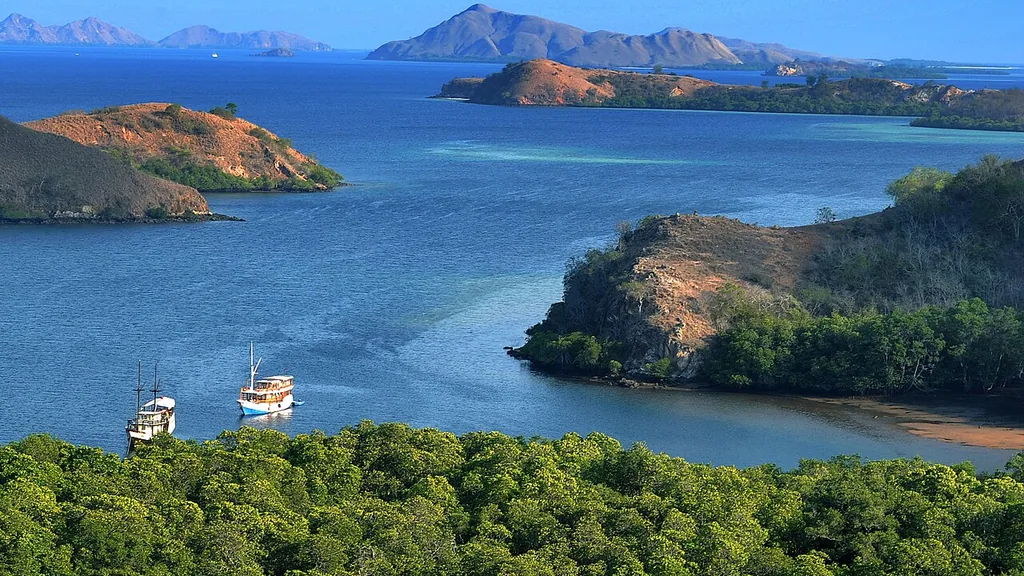
Flores is a normal, low-drama travel destination by most measures — it does not appear in Papua-style unrest warnings from Western governments — but “safe” still means paying attention to specific, real risks: boat and water safety, mountain road conditions, mosquito-borne illness, and the practical limits of rural healthcare. This guide breaks the question down by category instead of giving a single reassuring or alarming answer, because neither extreme is honest.
Last updated: August 26, 2026.
What Do Official Travel Advisories Actually Say About Flores?
The clearest starting point is government travel advisories rather than opinion. The US State Department’s Indonesia advisory highlights Central Papua and Highland Papua for civil unrest — Flores and Labuan Bajo are not in that same warning category. The UK Foreign, Commonwealth & Development Office’s Indonesia advisory carries a specific note about Mount Lewotobi Laki-Laki’s volcanic activity on Flores, rather than a broad “avoid Flores” instruction — a targeted hazard notice, not a blanket warning. In plain terms: official guidance treats Flores as a normal travel area with localised hazards to be aware of, not a region to avoid. Always check the current version of your own country’s advisory before travelling, since volcanic and civil conditions can change.
Is Labuan Bajo Safe at Night?
The main tourist harbour area and the Kampung Ujung waterfront dining strip are generally considered comfortable for visitors in the evening, and this is where most travellers eat dinner and watch the sunset. That said, standard urban caution applies everywhere: stick to lit, populated streets, use a hotel-arranged or app-based ride rather than walking long distances alone late at night, and keep valuables out of sight on a rented scooter. Labuan Bajo is a small, tourism-dependent town rather than a large city, which generally works in visitors’ favour, but “small town” does not mean zero petty theft risk — treat it with the same everyday awareness you’d use anywhere unfamiliar. Our Labuan Bajo after dark guide covers the waterfront dining scene and closing times in more detail.
How Dangerous Are Komodo Dragons, Really?
Komodo dragons are the largest living lizard species and are genuinely capable of a dangerous bite — this is not exaggerated for effect. What keeps encounters safe in practice is strict park procedure: a park ranger, armed with a forked stick, leads every guided walk on Komodo and Rinca Island, keeps visitors together as a group, and controls distance from any dragon encountered on the trail. Fatal attacks on tourists are rare and well outside the normal outcome of a properly ranger-guided visit; the real risk sits almost entirely with visitors who wander off the marked trail or approach an animal for a photo against ranger instruction. The rule that matters is simple: stay with your ranger, never approach or feed a dragon, and don’t wander off the path — following it is what keeps the “rare” in “rare attacks.”
What About Boat and Water Safety?
This is the category worth the most attention, because a Komodo trip almost always involves several hours on open water. Before booking, ask whether life jackets are provided and visible on board, whether the boat carries a working radio, and whether snorkelling stops are actively supervised rather than “jump in and go.” Our boat safety and seasickness guide and operator verification checklist cover the specific questions worth asking before paying a deposit — an operator who cannot answer them plainly is the actual red flag, more than any statistic about the sea itself. Sea conditions are also genuinely calmer April to November than during the December–March wet season, when swells can add real risk to exposed crossings; a reputable operator will reroute or delay rather than push through rough weather.
Health Risks: Malaria, Dengue, and Water
US CDC guidance lists eastern Indonesia, including the Labuan Bajo and Komodo area, as a malaria-risk zone, which means it is worth a conversation with a travel health provider before your trip, even though some regional and local sources separately describe West Manggarai as having malaria elimination status — the two positions genuinely differ, so we present both rather than picking the more convenient one. Dengue is a real, ongoing mosquito-borne risk across Indonesia generally, not specific to Flores, and standard precautions (repellent, covering up at dawn and dusk) apply the same way they would anywhere in the tropics. Tap water is not considered safe to drink; bottled or filtered water is the standard practice everywhere on the island. Our full health, vaccination and hospital guide goes through this in more depth, including where to get care if something does go wrong.
Mountain Roads and the Overland Route
If your trip includes the Trans-Flores overland route toward Bajawa, Ende, or Kelimutu, road safety becomes a real factor in its own right — mountain roads are narrow and winding, average speeds are genuinely slow (often 30–40 km/h), and the December–March wet season brings occasional landslide delays on some sections. This is a strong argument for booking a private car with an experienced local driver-guide rather than self-driving a scooter or rental car on unfamiliar mountain roads, particularly at night. Our private driver guide and Trans-Flores road trip planner cover what a safe, realistic overland pace looks like.
What a Careful Operator Actually Does Differently
The gap between a safe trip and a risky one usually comes down to operator practices you can check before booking, not luck. A careful boat operator maintains visible, sufficient life jackets on board, briefs passengers before departure rather than assuming everyone already knows the drill, and carries working communication equipment for a park where phone signal drops out between islands. On the overland side, a careful driver-guide paces mountain-road days realistically rather than promising an ambitious schedule that pressures rushed driving after dark. None of this is exotic — it’s the same due diligence you’d apply to any adventure travel booking anywhere in the world, and asking about it directly, before paying a deposit, is a completely normal question that a legitimate operator will answer without hesitation.
Practical Safety Habits Worth Adopting
- Buy travel insurance that explicitly covers boat travel, trekking, and medical evacuation — standard policies sometimes exclude one of these by default.
- Share your itinerary with someone back home, especially for multi-day boat charters or overland routes with limited phone signal.
- Carry cash for rural areas where ATMs and card payment are unreliable, and keep it split between bags rather than in one place.
- Confirm your operator’s safety basics — life jackets, a working radio, a ranger for every dragon walk — before paying a deposit, not after boarding.
Frequently Asked Questions
Is Flores safe for solo female travellers?
Many solo female travellers visit Flores without incident, and the same general precautions that apply anywhere unfamiliar — trusted transport, awareness at night, sharing your itinerary — are the practical baseline here too. Choosing operators with visible, verifiable safety practices matters more than the destination’s general reputation.
Are Komodo dragons dangerous to tourists?
They are capable of a dangerous bite, but fatal attacks on properly ranger-guided visitors are rare. The safety system — a ranger with a stick, a controlled group, no wandering off-trail — is what keeps the real-world risk low.
Is it safe to swim in Komodo National Park?
Yes, at the designated, operator-supervised snorkelling stops used by tour boats. Currents can be strong in specific channels, which is exactly why supervised stops and a life-jacket policy on board matter.
Do I need travel insurance for a Komodo boat trip?
Yes — specifically insurance that covers boat travel and medical evacuation, since standard policies do not always include both by default and Labuan Bajo’s medical facilities are more limited than Bali’s for complex cases.
Is Labuan Bajo safe for families with children?
Generally yes, with the same boat- and water-safety diligence that applies to any traveller, plus a private rather than shared boat trip if you want more control over pacing and supervision — see our family trip planning guide.
What natural hazards should I be aware of in Flores?
Flores sits in a seismically active region with occasional earthquakes and active volcanoes, including Mount Lewotobi Laki-Laki, which the UK FCDO specifically flags in its advisory. Check current volcanic and seismic advisories for your travel dates rather than relying on general reassurance, and follow any local evacuation guidance without hesitation if conditions change while you’re there.
Plan a Safer Flores Trip
Two ways to book the same days: Komodo Luxury’s Labuan Bajo tour desk, or Labuan Bajo yacht rental for a different shape of trip.
Nothing in the honest risk assessment above books a trip: that part runs through one-day Komodo trip packages or shared open-trip departures.
Flores or Bali: Comparing Safety and Health Risks
Travellers often weigh up which of the two islands is safer when planning a trip. While both islands are considered safe by the standards of Indonesian tourism, they differ in certain risk categories. Bali experiences higher levels of petty theft and road accidents, primarily due to its heavy traffic and larger crowds. In contrast, Flores is quieter, with less crime reported, but presents more pronounced environmental and health hazards, such as steep mountain roads and limited emergency facilities outside Labuan Bajo.
One of the most significant differences is the malaria risk on Flores. Flores remains a moderate malaria zone according to WHO and Indonesian Ministry of Health data, especially during the wet season (December–March). Preventive measures such as bed nets and appropriate antimalarial medication are strongly advised if you’re travelling beyond Labuan Bajo, as rural areas see more cases. Bali, by comparison, is broadly classified as low risk for malaria, with cases being rare and mostly confined to remote areas.
Dengue in Komodo and Labuan Bajo is a recurring concern, particularly during or just after the rainy months. Both locations have reported outbreaks, often correlating with increased mosquito activity from December to May. While dengue is present in Bali as well, the difference is that limited local hospital capacity in Flores can make even moderate cases more logistically challenging. Pack mosquito repellent with DEET, wear long sleeves in the early morning and late afternoon, and consider accommodation with screens or air-conditioning for better protection.
In summary, safety in Flores hinges more on environmental and health factors than crime. If you can manage the malaria and dengue risks with practical precautions, and are prepared for challenging infrastructure, Flores offers a genuinely rewarding but less cushioned experience than Bali.
More Questions Answered
Is malaria a risk on Flores?
Yes — malaria is a known risk on Flores. Local statistics and WHO maps classify Flores as a moderate malaria zone, particularly in rural areas and during the wet season from December to March. Overnight stays outside major towns such as Labuan Bajo increase exposure. Using bed nets and antimalarial medication is strongly recommended for extended travel.
Is Flores safe for children?
Flores is suitable for children with basic planning. Medical facilities are limited compared to Bali, so bring medicines and first aid supplies. Supervise children around mountain roads, beaches, and when near wildlife. The main tourist areas like Labuan Bajo and Kelimutu are the most manageable for families.
Is snorkelling in Komodo safe for children?
Snorkelling in Komodo can be safe for children aged eight or above who are strong swimmers and can follow boat crew instructions. Currents can be strong at some sites. Choose operators with child-sized gear and clear safety briefings. Areas like Kanawa Island have gentler conditions suitable for families.
Is it safe to travel to Flores Island?
It is generally safe to travel to Flores Island. The main risks are environmental: rough roads, limited healthcare, and mosquito-borne diseases. Most visitors complete their trips without serious incidents. Plan transport in advance and pack a well-stocked travel first aid kit for rural journeys.
Is tap water safe in Labuan Bajo?
Tap water is not safe to drink in Labuan Bajo. All drinking water should be bottled or filtered. Even locals avoid consuming unboiled tap water due to inconsistent water treatment and potential contamination. Use safe water for brushing teeth and avoid ice unless certain it’s made from purified sources.
Is it safe to swim in the waters around Komodo?
Swimming in the waters around Komodo is safe at calm, designated spots but currents can be unpredictable. Always ask your guide about local conditions before entering. Avoid swimming near Komodo Island itself due to strong currents and wildlife hazards. Stick to supervised beach areas on nearby islands for the safest experience.
Do I need malaria tablets for Flores?
Most travel health providers do recommend malaria tablets for Flores, especially for visits outside Labuan Bajo or during the wet season. The risk is greater in rural villages and forested areas. Consult your doctor to choose the right prophylactic based on your route and health profile.
The Komodo Luxury desk vets vessel safety practices as part of every booking, from life-jacket and radio checks to confirming a ranger accompanies every dragon walk. For a private, closely coordinated Komodo boat trip or Flores overland route, see our Komodo boat trip page or send your dates on WhatsApp to wa.me/6281138108110.
Sumber
Keep reading
More from the journal
-
Island Travel
Waterfalls of Flores: Cunca Wulang and Beyond
Cunca Wulang and Cunca Rami, both in West Manggarai Regency within reach of Labuan Bajo, are Flores' two best-known waterfalls…
12 min Read -
Island Travel
Health, Vaccines and Hospitals in Flores
Flores and the Komodo/Labuan Bajo area sit in a zone the US CDC lists as malaria-risk, dengue is an ongoing…
12 min Read -
Island Travel
Grab, Gojek and Taxis in Flores
Grab and Gojek both operate in Labuan Bajo, mostly as motorbike (ojek) service rather than car rides, and are reported…
12 min Read