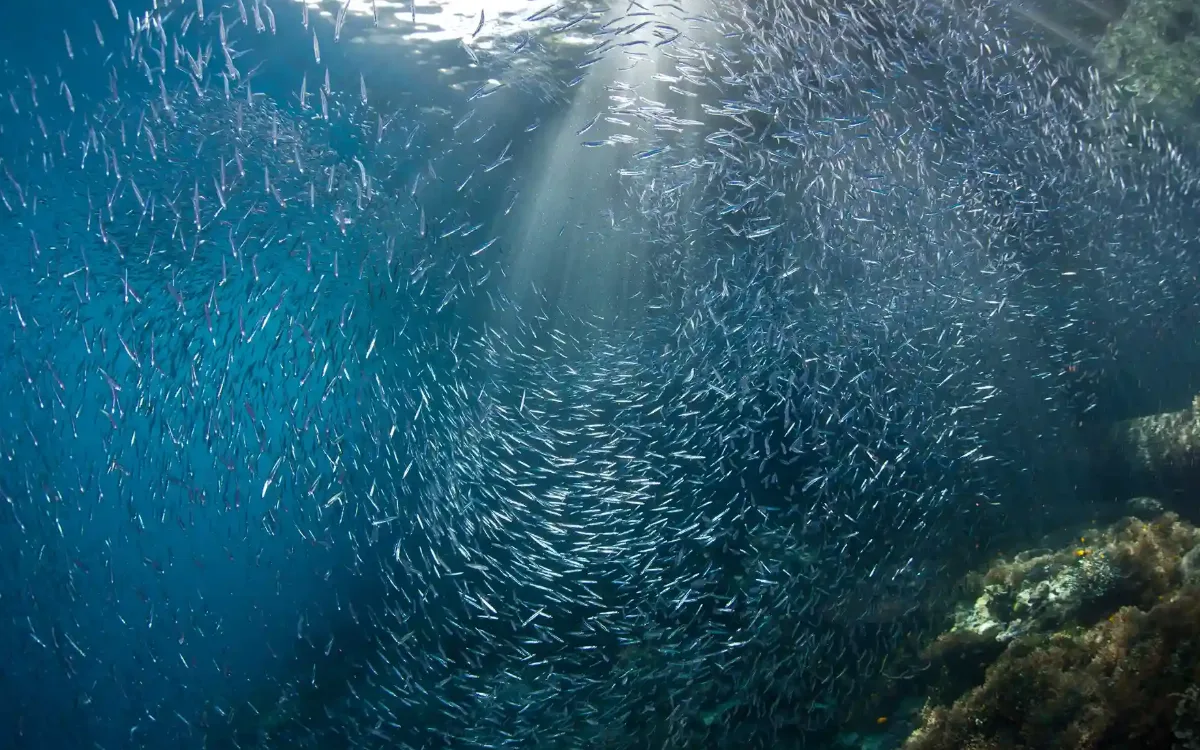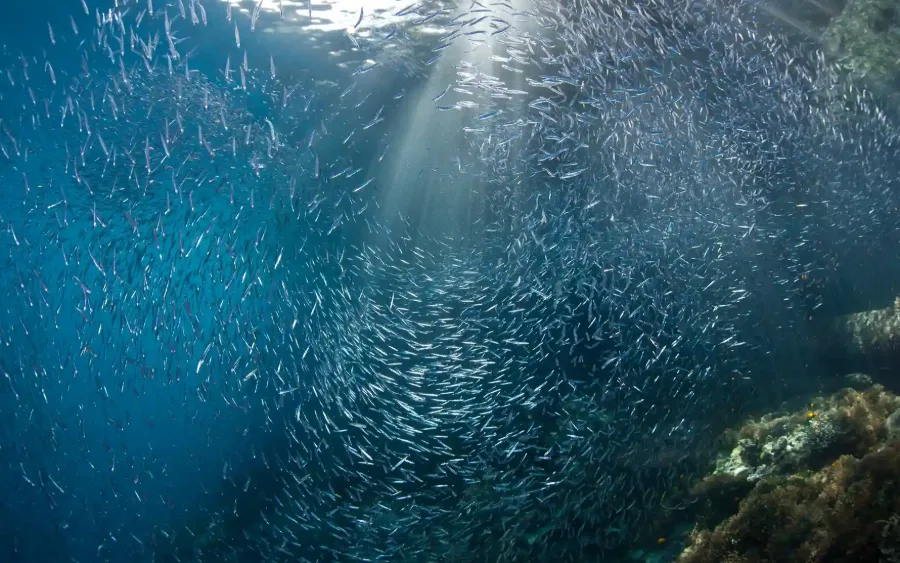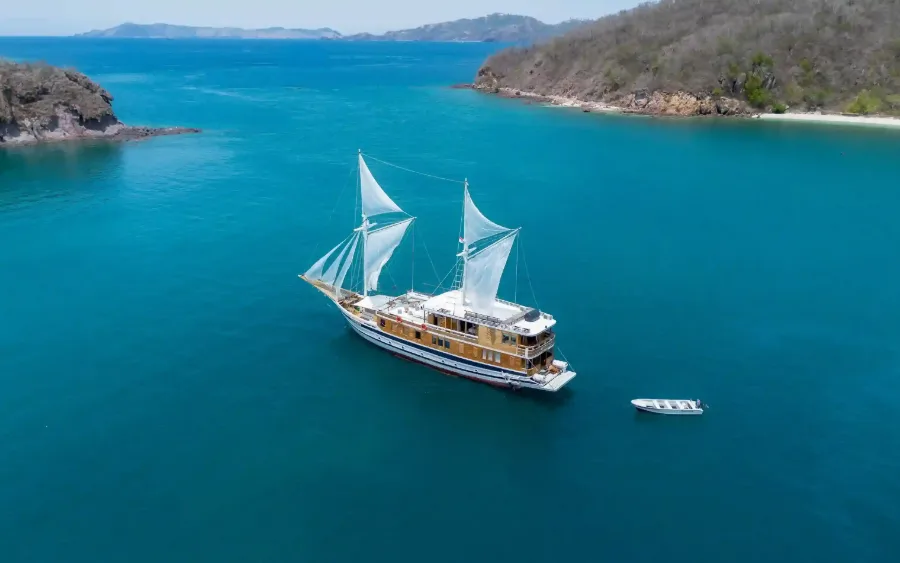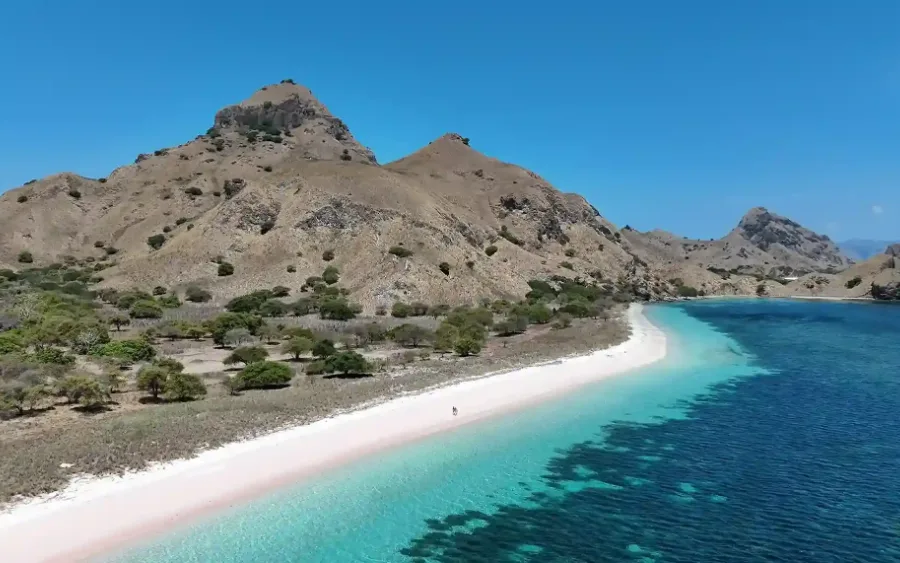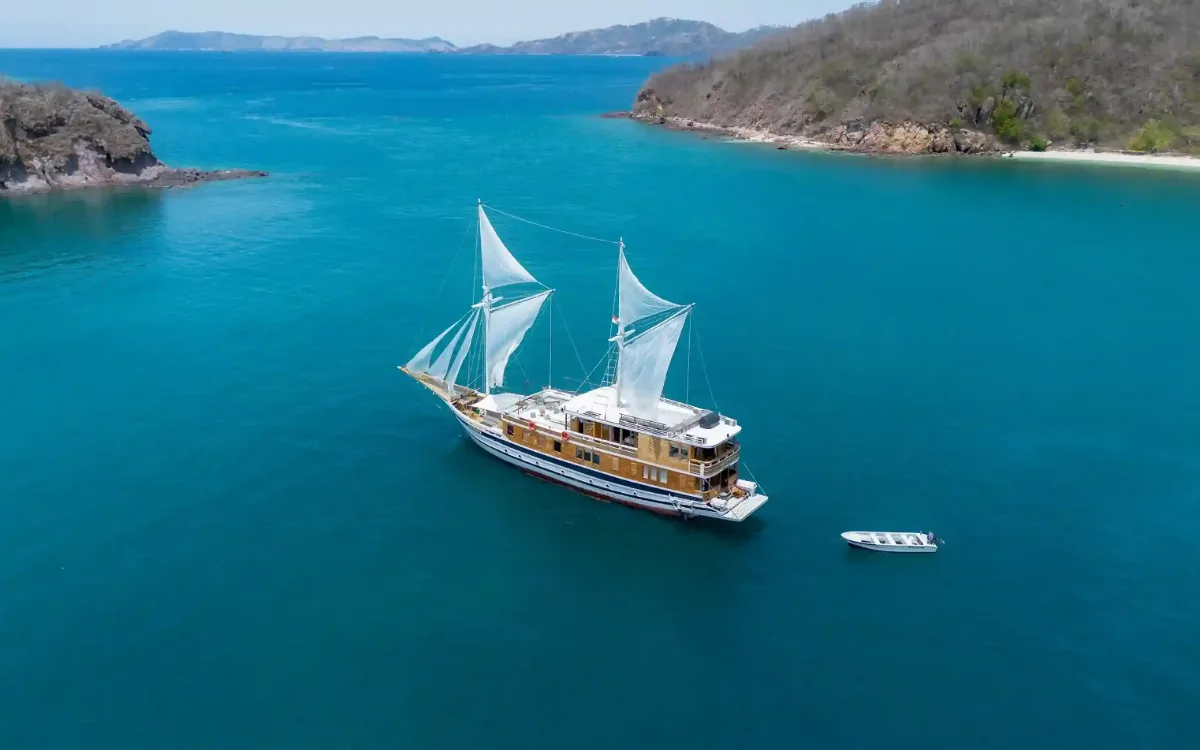
A Komodo diving liveaboard sleeps you aboard the dive boat itself for two to four nights, reaching sites like Manta Point, Batu Bolong, Castle Rock and Crystal Rock in the early-morning slack-current windows that day boats from Labuan Bajo usually miss. This page covers the park’s main dive sites, who each suits, how many dives per day to expect, and how a Komodo dive liveaboard compares to land-based diving and to Raja Ampat, with current cabin and rate information on the linked Komodo Luxury page.
Why Dive Komodo from a Liveaboard Instead of Land-Based Day Trips?
Komodo’s best dive sites are spread across a park roughly 60km north to south, and several of the strongest sites — Batu Bolong, Castle Rock, Crystal Rock, Manta Point in the south — sit far enough from Labuan Bajo that a land-based day boat spends much of the day in transit rather than underwater. A liveaboard anchors close to the following morning’s site overnight, so the first dive happens early, in the calmer, current-friendlier window before conditions build through the day. For divers prioritizing dive count and site access over budget, that difference in dive quality and timing is the main reason to choose a liveaboard over day trips, which are covered on our general Komodo liveaboard charter page for non-diving travelers.
What Are Komodo’s Best Dive Sites?
| Site | Known for | Difficulty |
|---|---|---|
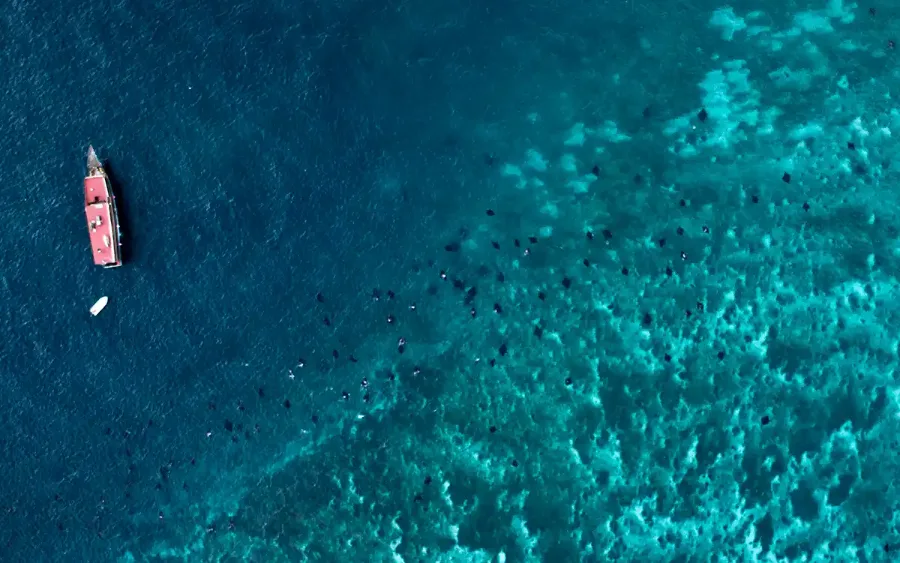
| Manta Point | Reliable manta ray sightings at a cleaning station | Beginner–intermediate, mild current |
| Batu Bolong | A small pinnacle covered in dense, colorful soft coral and reef fish | Intermediate–advanced, strong current common |
| Castle Rock | Big schooling fish (trevally, tuna) and shark sightings in current | Advanced, strong current |
| Crystal Rock | Similar to Castle Rock — big fish action, vivid coral cover | Advanced, strong current |
| Pink Beach / Pink Beach reef | Easier, shallower reef diving and snorkeling | Beginner-friendly |
| Siaba / Sabolan area | Gentle muck and reef diving, good for photography | Beginner–intermediate |
Site difficulty in Komodo is driven almost entirely by current, which can shift strength and direction quickly around pinnacles like Castle Rock and Crystal Rock — this is a park where a dive guide’s local knowledge of that day’s conditions matters more than it does on a calm reef wall elsewhere.
Which Dive Sites Suit Beginners?
Pink Beach’s reef, the sheltered bays around Sabolan and Siaba, and calmer days at Manta Point are the most realistic beginner-friendly options in Komodo. Castle Rock, Crystal Rock and Batu Bolong are current-dependent sites generally reserved for divers with enough logged dives to handle unpredictable drift and, at times, negative entries. If you are newly certified or have not dived in strong current before, say so when booking — a competent operator will build your itinerary around calmer sites rather than putting you into Castle Rock on your first Komodo dive.
How Many Dives Per Day on a Komodo Liveaboard?
Three dives per day is standard on most Komodo dive liveaboards — typically an early-morning dive at the best current window, a mid-morning or midday second dive, and an afternoon third dive, with a night dive sometimes offered as an optional add-on rather than a standard fourth dive. Surface intervals between dives run around one hour, used for snacks, sun and logging the previous dive. Divers wanting a lighter schedule can usually skip a dive and rest aboard rather than being required to join every one.
Do I Need a Course or Certification Before Diving Komodo?
An Open Water certification is the minimum most operators require for liveaboard diving in Komodo, given the currents at several signature sites; Advanced Open Water or equivalent experience is recommended, not always mandatory, for Castle Rock and Crystal Rock specifically. If you are not yet certified, a Labuan Bajo stay before your liveaboard is a reasonable time to complete a PADI Open Water course through a Labuan Bajo dive shop, since several operate certification programs alongside their liveaboard and day-trip business.
What Is Macro Diving Like in Flores and Komodo?
Alongside the big-animal, strong-current sites Komodo is best known for, the park and nearby Flores coastline also hold calmer muck and macro sites — nudibranchs, pygmy seahorses, frogfish and other small reef life — typically at gentler locations like parts of Sabolan and sheltered bays closer to Labuan Bajo. These sites suit photographers and divers who prefer a slower, close-focus dive over a drift dive, and a good liveaboard itinerary will usually mix at least one macro-friendly site into an otherwise current-heavy schedule.
Komodo vs Raja Ampat: Which Should Divers Choose?
Komodo diving is defined by strong current, big pelagic action and manta encounters across a compact, easily reached park; Raja Ampat diving is defined by exceptional coral reef biodiversity, calmer conditions at many sites, and a remote, harder-to-reach location that generally means longer, more expensive liveaboard trips. Divers with limited time or budget, or those wanting a shorter trip that still delivers strong pelagic diving, tend to choose Komodo; divers prioritizing reef biodiversity and willing to commit 7–10+ days and a higher budget often add Raja Ampat as a second trip. See current Raja Ampat charter options if you are deciding between the two or planning to combine them.
What Does a Komodo Dive Liveaboard Cost?
Dive liveaboard pricing depends on trip length, cabin class, and whether tanks, weights and nitrox are included or charged separately — because these variables shift by season and operator, current cabin classes and indicative rates are listed directly on Komodo Luxury’s liveaboard page rather than restated here. As a general pattern across the industry, dive-focused liveaboards run somewhat higher than general sightseeing liveaboards of the same length, reflecting tank fills, a dedicated dive guide, and dive-specific safety equipment aboard.
What Time of Year Is Best for Diving Komodo?
Visibility and conditions across Komodo vary by season and by which part of the park you are diving — the north tends to be calmer, the south (Manta Point area) can bring cooler water and stronger swell in certain months. Our Flores weather month-by-month guide covers the broader wind and sea-state pattern that also affects diving conditions; ask your chosen operator directly about current-season visibility at the specific sites you most want to dive, since local knowledge of that month’s conditions is more reliable than a generic seasonal rule.
What Dive Equipment Should You Bring vs Rent?
Most Komodo dive liveaboards provide tanks, weights and a BCD/regulator set as standard rental gear, but quality and fit vary meaningfully by operator and boat age. Divers who dive regularly enough to have preferences generally bring their own mask (fit is highly individual and a poorly fitting rental mask can ruin a dive), and often their own regulator if they have one, while renting bulkier items like tanks and weights that are impractical to travel with. A save-a-dive kit — spare mask strap, o-rings, fin strap — is worth packing given the limited availability of dive shops once you’re on a multi-day sailing away from Labuan Bajo.
What Should Non-Divers on a Mixed Group Trip Know?
On a dive-focused liveaboard, the daily schedule and site selection is built around diver needs first — early departures for the best current windows, sites chosen for dive quality rather than snorkel accessibility. A non-diving travel companion can usually snorkel at the same sites, but should expect more surface-interval waiting time than they would on a general sightseeing liveaboard built for a mixed group. If most of your group doesn’t dive, a general Komodo liveaboard itinerary, covered on our Komodo liveaboard charter page, is usually the better fit than a dive-focused one.
How Does Weather Affect Dive-Site Access Specifically?
Strong-current sites like Castle Rock and Crystal Rock are the first to be skipped or rescheduled by a responsible operator when conditions turn unfavorable, since these sites carry real risk in poor conditions even for experienced divers. A liveaboard’s multi-day format gives more flexibility to wait out a bad window and dive a strong site on a better day than a single-day dive trip does, which is one practical advantage of the liveaboard format for divers specifically targeting Komodo’s current-dependent signature sites.
Frequently Asked Questions
What certification level do I need for Komodo’s strongest current sites?
Most operators recommend Advanced Open Water or equivalent logged experience in current for sites like Castle Rock and Crystal Rock, even where it is not a strict requirement. Tell your operator your certification level and experience honestly when booking so your itinerary is built around sites that match your skill.
How many dives are included on a typical Komodo liveaboard?
Three dives per day is standard across most sailings, so a 3D2N liveaboard typically includes around 6–8 dives depending on how the first and last days are scheduled around boarding and disembarkation times.
Is nitrox available on Komodo liveaboards?
Many, though not all, Komodo dive liveaboards offer nitrox, usually at an additional cost. Confirm availability and whether it is included or an add-on when you book, since not every boat carries a nitrox membrane compressor.
Can non-divers join a Komodo dive liveaboard?
Some dive-focused liveaboards accept non-diving guests who snorkel instead, but the itinerary and site selection is built around diver needs first, so a non-diver may spend more surface time waiting. If most of your group does not dive, our general Komodo liveaboard charter page covers itineraries built for a broader mix of activities.
What Marine Life Can You Expect to See?
Beyond manta rays at Manta Point, Komodo’s waters support a genuinely wide range of marine life across its dive sites: reef sharks (whitetip and occasionally other species) at current-swept sites like Castle Rock and Crystal Rock, large schooling fish (trevally, tuna, fusiliers) drawn to the same nutrient-rich currents, sea turtles at several reef sites, and a dense variety of hard and soft coral cover that has made Batu Bolong a long-standing favorite among Komodo’s regular divers. Macro life — nudibranchs, pygmy seahorses, various shrimp and crab species — rewards divers who slow down at the calmer, muck-diving-style sites rather than chasing only the big-current locations.
How Does Water Temperature Vary Across the Park?
Komodo National Park sits at a mixing point between warmer water flowing from the north and cooler, nutrient-rich upwelling from the south, which is part of why the park supports such a wide range of marine life in a relatively compact area. Divers heading to southern sites like Manta Point should expect noticeably cooler water than at northern sites closer to Labuan Bajo, and a thicker wetsuit (or a second layer) for the south is a common adjustment experienced Komodo divers make rather than relying on a single wetsuit thickness for the whole trip.
Booking a Dive Liveaboard: What to Confirm Before You Pay
Beyond the general operator-vetting questions covered for Komodo liveaboards broadly, dive-specific questions worth asking include: how many dives per day are actually included versus optional add-ons, whether nitrox is available and at what cost, what the guide-to-diver ratio is on a typical dive group, and whether the boat carries oxygen and a functioning emergency action plan for dive-related incidents. A dive-focused operator should answer these specifics readily; hesitation or vague answers on safety-related questions specifically is worth treating as a real signal, not a minor detail.
Book Your Komodo Diving Liveaboard
Current dive liveaboard cabins, sailing dates and dive-site itineraries are listed on Komodo Luxury’s Komodo liveaboard page, alongside the operating fleet on its fleet listing. Non-diving travel companions can be booked onto the same sailing through the Komodo sailing trip or luxury phinisi Komodo pages if your group is mixed diver and non-diver. This site is published by Flores Island Travel, part of Juara Holding Group, which has run travel operations from Bali since 2015 — context worth having when you read the dive-liveaboard section above.
Last updated: August 26, 2026.
Planning Your Flores and Komodo Liveaboard Diving Experience
The best Komodo liveaboard diving trips typically begin from Labuan Bajo, the main port town on Flores, before heading west into Komodo National Park. Most liveaboard itineraries include several dive sites, such as Batu Bolong, Castle Rock, and the Siaba area. These trips reach both ends of what the park offers: the big-fish encounters it is famous for, sharks included, and the macro diving that keeps photographers coming back. The best spots for macro are the north coast of Komodo and the sand slopes near Siaba Besar, where frogfish, ghost pipefish and nudibranchs are routinely spotted and logged.
Choosing between liveaboard vs day trip diving Komodo depends on your priorities. Liveaboards visit more remote and diverse sites—reaching reefs, pinnacles and current-swept channels that land-based boats cannot, especially early in the day. If you want to maximise dive count and site variety, the best diving liveaboards Komodo usually offer four dives per day, with some including night dives. Many Flores diving liveaboard budget options also offer flexible stays, but cabins and facilities may be simpler than on premium vessels.
Labuan Bajo dive sites for beginners are found close to shore and within sheltered bays. Flores diving for beginners is best around Sabolan and Siaba, with conditions calmer than in exposed areas. A liveaboard can accommodate mixed-ability groups, but be sure to check which dive sites your operator visits. For non-divers or snorkellers, Flores liveaboard snorkeling trips often parallel the same routes, allowing swimming with manta rays or diving with turtles Komodo is famous for.
Water temperature Komodo dive season can range from 21°C in the southern park during July–August to 29°C in the north from October–December. The best time of year for a liveaboard out of Flores is May to October, for calm seas and Manta Point action. Komodo liveaboard cost varies widely: basic boats run lower per day, but the better vessels include nitrox, quality guides and a broader roster of dive sites.
More Questions Answered
Is diving in Komodo dangerous?
Diving in Komodo can be hazardous for inexperienced divers due to powerful, shifting currents at many sites. More than 30 Komodo dive sites have advanced or expert-level conditions, but trips do include beginner options. Always dive with current-knowledgeable local guides and follow briefings closely.
How many dive sites in Komodo?
There are over 40 recognised Komodo dive sites within the national park, ranging from macro muck dives to strong-current pinnacles. Liveaboards can cover 10–20 unique sites on a typical four-day itinerary, while day boats usually access a smaller selection closer to Labuan Bajo.
Is December a bad time for Komodo diving?
December marks the start of the wet season, when seas can be rough and underwater visibility drops, especially in the south. Northern sites are sometimes still accessible, but trip cancellations and limited site choice make December a less reliable month for Komodo diving.
What water temperature can I expect during Komodo dive season?
Water temperature in Komodo varies by area and season: expect 26–29°C in the north from October–December, and cooler 21–24°C in southern sites during July–August. Packing a 3–5mm wetsuit is recommended year-round, as thermoclines are common, especially on deeper dives.
Message Komodo Luxury on WhatsApp at +62 811-3823-875 or email sales@komodoluxury.com with your certification level, group size and preferred dates.