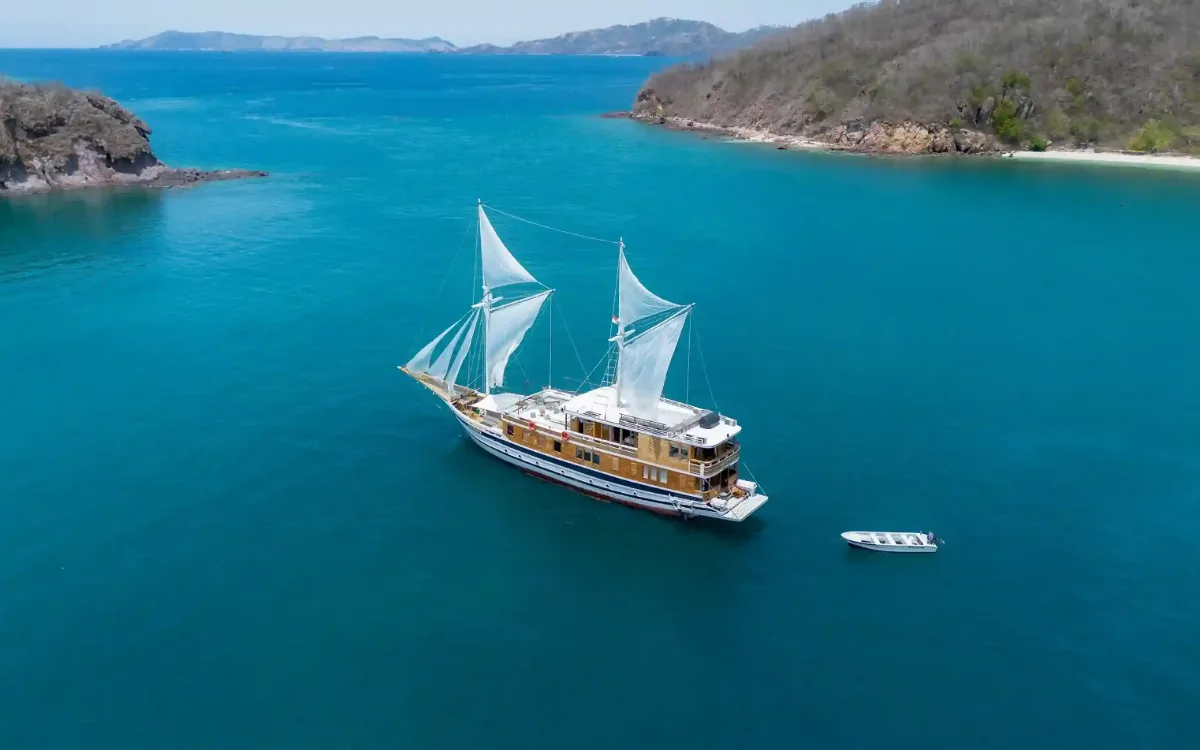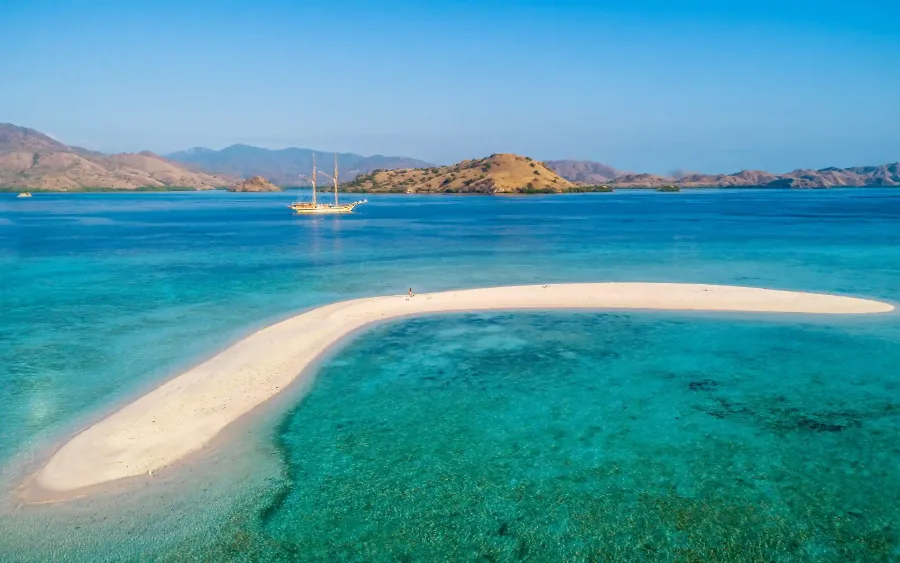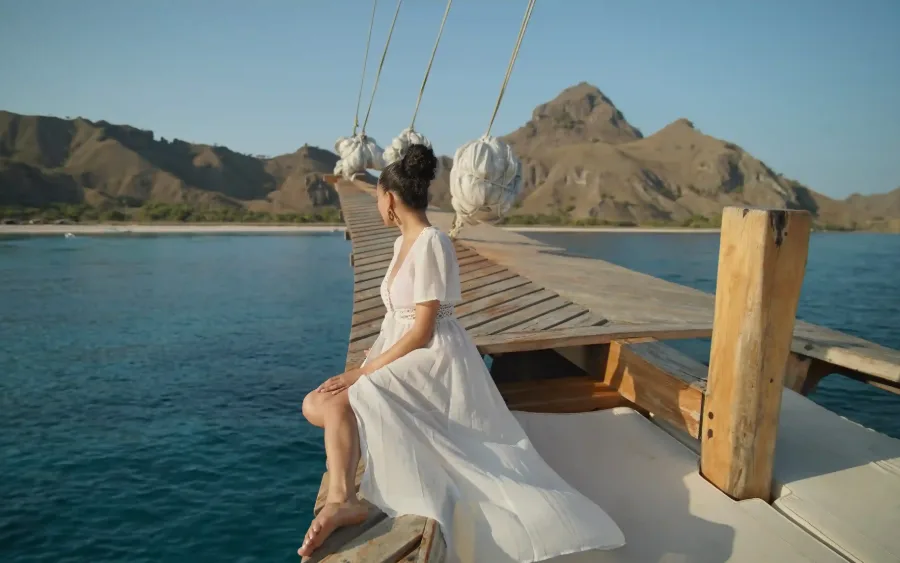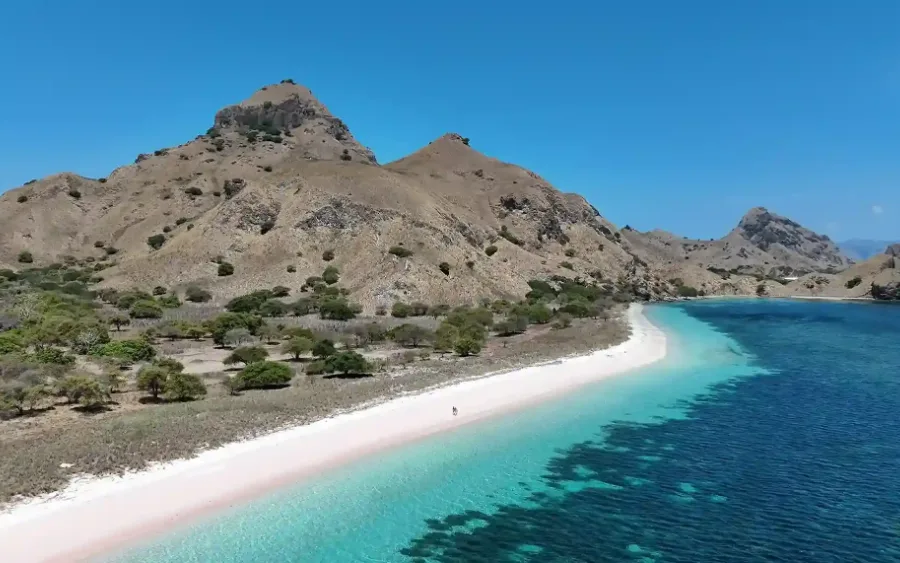
A Komodo liveaboard is a multi-day charter boat you sleep aboard, with cabins ranging from shared bunk rooms to private en-suite cabins, sailing between Komodo National Park’s dive and snorkel sites, beaches and viewpoints over two to four nights rather than returning to a Labuan Bajo hotel each evening. This page covers cabin types, how many days actually make sense, how the itinerary and mooring pattern works, and what to check before you book — with current cabin availability and rates on the linked Komodo Luxury liveaboard page rather than fixed numbers here.

What Is a Komodo Liveaboard, Exactly?

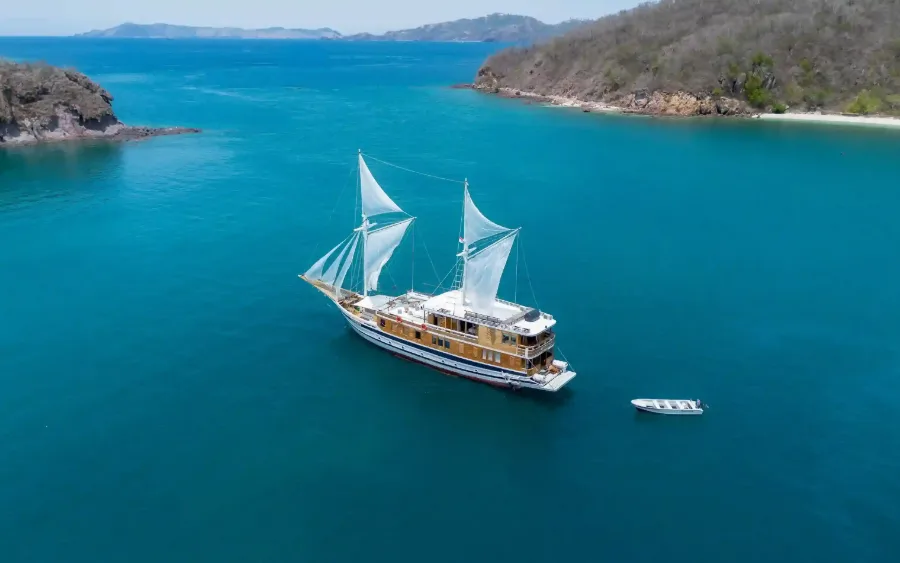
A liveaboard is a boat that functions as your hotel for the length of the trip. Instead of a day boat returning to port every evening, the vessel anchors overnight in a sheltered bay inside or near Komodo National Park, then moves to the next site early the next morning while guests are often still asleep or having breakfast. That overnight sailing is the entire point: it converts long, tide-dependent transit times between far-apart sites — Padar, Pink Beach, Rinca, Manta Point, Kanawa — into something that happens while you sleep, leaving daylight hours for the park itself.

This is different from the shared day trips covered on the Flores tour packages and prices page and from a single land-based hotel stay in Labuan Bajo. It also sits alongside, not instead of, the overland side of Flores — many travelers combine a 2–4 night liveaboard with a few days on the Flores overland route covered in this guide before or after.

What Cabin Types Are Available on a Komodo Liveaboard?

Cabin class is the single biggest driver of both comfort and price on any liveaboard, and the terminology varies by operator, so ask specifically what is included rather than relying on the class name alone.

Cabin type Typical layout Bathroom Who it suits
Shared/dorm cabin Bunk beds, 4–8 guests per room Shared, shared with other cabins Solo travelers and backpackers on open trips
Standard private cabin Double or twin bed, 1–2 guests Ensuite or semi-private Couples and friends wanting privacy without a premium price
Deluxe/VIP cabin Larger bed, more headroom, sometimes a window or portlight Ensuite, better fittings Couples wanting more comfort, anniversary or honeymoon trips
Master suite King or queen bed, dedicated seating area on some boats Full ensuite, sometimes a bathtub Honeymooners and small private charters

On a fully private charter, cabin allocation is yours to decide across your own group; on a shared/open-trip liveaboard, cabin class is booked and paid per person. Our Komodo diving liveaboard page covers the same cabin logic specifically for dive-focused trips, where tank and gear storage near the dive deck matters as much as the cabin itself.

How Many Days Should a Komodo Liveaboard Be?

Three days and two nights (3D2N) is the most common Komodo liveaboard length, and it is enough to cover the core sites — Padar sunrise viewpoint, Pink Beach, a Komodo or Rinca dragon walk, and two or three snorkel or dive stops — without excessive backtracking. Four days and three nights (4D3N) adds slack for weather delays, a second dive-heavy day, or a run further north or south to quieter sites, and is the better choice for dedicated divers who want more than two dive days. Trips longer than four nights typically extend toward Sumbawa or further into the park’s outer islands rather than repeating the core sites. For a full breakdown of how trip length interacts with your other priorities, see our decision guide on how many days you actually need in Komodo.

How Does a Typical Liveaboard Itinerary Work?

Most 3D2N Komodo liveaboards follow a broadly similar shape, adjusted for wind, tide and which mooring permits the operator holds for that sailing:

  • Day 1: Board in Labuan Bajo (usually late morning), sail toward Rinca or Kalong Island for a Komodo dragon walk and a sunset flying-fox viewing, first night at anchor.
  • Day 2: Early Padar sunrise hike, Pink Beach snorkel or dive stop, Manta Point (season-dependent), and a Komodo Island dragon walk if not done on Day 1, second night at anchor further north or west.
  • Day 3: A final snorkel or dive stop such as Kanawa or Sabolan, then return sailing to Labuan Bajo, arriving mid-to-late afternoon.

The exact order shifts with wind direction and park ranger scheduling, and a good operator will tell you the planned route before boarding rather than promising every site regardless of conditions.

Liveaboard Regulations: What Guests Need to Know

Every vessel entering Komodo National Park must be registered with park authorities, and since April 2026 that registration runs through the SiOra online booking system rather than manual counter registration — in practice this is handled by your liveaboard operator, not the guest directly, so you should not need to register anything yourself; see our SiOra booking guide for how the system works. Park entrance and conservation fees follow national PNBP tariff regulation PP 36/2024 and are typically built into your liveaboard package price or collected on the first park day — confirm with your operator whether fees are included or additional before you book. A ranger accompanies dragon-viewing walks on Komodo and Rinca; walking off-trail without a ranger is not permitted.

Komodo Liveaboard vs Raja Ampat Liveaboard: What’s the Real Difference?

Both regions run liveaboard-style multi-day charters, but the trips answer different questions. Komodo liveaboards are shorter (typically 3–4 nights), closer to a single embarkation port (Labuan Bajo), and mix Komodo dragon walks, iconic beaches and moderate diving in one trip — a strong fit if your time is limited or your group has mixed interests beyond diving. Raja Ampat liveaboards run longer (commonly 7–10+ nights, since sites are more spread out and the region is remote), lean more heavily toward serious diving and birding, and generally cost more per night given the longer sailing distances and remoteness of the operating area. Divers chasing macro life and pristine reef often add a Raja Ampat leg after Komodo rather than choosing one over the other; see current Raja Ampat yacht charter options if you are weighing both.

What Season Is Best for a Komodo Liveaboard?

The dry season, roughly April through November, brings calmer seas, better visibility and more predictable sailing — see our month-by-month Flores weather guide for the seasonal pattern in more detail. Peak booking months (July–August, and around Christmas/New Year) mean cabins on popular boats sell out weeks or months ahead; booking 2–3 months out is a reasonable target in high season, less critical outside it.

What Should You Pack for a Liveaboard?

Cabin space and storage are limited compared to a hotel room, so packing light and in a soft duffel rather than a hard suitcase matters more than it would on a land trip. Seasickness medication, reef-safe sunscreen, a dry bag for phones and cameras, and a headlamp for below-deck movement at night are the items guests most often wish they had brought. Our dedicated liveaboard packing guide covers the full cabin-life checklist, including what divers specifically need beyond the general list.

Will I Get Seasick on a Komodo Liveaboard?

Some crossings between islands can be choppy, particularly in the shoulder-season months either side of the dry season peak, so guests prone to motion sickness should bring their own medication rather than assume the boat carries enough for everyone. Cabins toward the center of the boat, lower down, generally feel less motion than cabins at the bow or upper deck. Spending time on deck in fresh air, watching the horizon, tends to help more than staying below in a closed cabin.

Crew, Safety and What to Verify Before Booking

A liveaboard should carry life jackets for every guest, a functioning VHF radio, and a crew who can demonstrate safety procedures on request — these are reasonable questions to ask before paying a deposit, not an imposition on a legitimate operator. Ask specifically about the boat’s Komodo National Park operating permit, its passenger capacity versus how many guests are actually booked on your sailing, and what happens to your booking if weather forces a route change. Fresh water supply, generator hours (for charging devices and fans/AC), and whether meals are included for the full sailing are the other practical questions worth asking directly.

Frequently Asked Questions

What is the difference between a private and a shared (open-trip) Komodo liveaboard?

On a private charter, your own group has exclusive use of the whole boat and every cabin; on a shared or open-trip liveaboard, cabins are sold individually and you share common areas and the itinerary with other travelers you did not choose. Private charters cost more overall but let you set the exact route and pace; shared trips cost less per person and run on a fixed departure schedule.

How many days in advance should I book a Komodo liveaboard?

For dry-season sailings, especially July–August and the Christmas/New Year period, 2–3 months ahead is a sensible target since better boats and preferred cabin classes sell out first. Outside peak months, 3–4 weeks is often workable, though popular boats can still fill early.

Is a Komodo liveaboard suitable for non-divers?

Yes — most Komodo liveaboards are built around a mix of dragon walks, beach stops, sunrise viewpoints and snorkeling rather than diving alone, and snorkeling requires no certification. Dedicated dive liveaboards exist too; check whether a given departure is a general sightseeing-and-snorkel itinerary or a dive-focused one before booking if diving is not your priority.

What happens if the weather cancels part of the itinerary?

Reputable operators will substitute a sheltered alternative site rather than force a crossing in unsafe conditions, and park rangers can also restrict access to specific sites on short notice. Ask your operator’s weather and rescheduling policy before booking so you know what to expect if a site is swapped.

What Meals Are Served on a Komodo Liveaboard?

Full board (breakfast, lunch, dinner, plus tea/coffee and snacks between meals) is standard on almost every Komodo liveaboard, prepared in a small onboard galley rather than catered from shore. Indonesian home-style cooking — rice, grilled fish, vegetables, fruit — is the typical daily pattern, with quality varying meaningfully by operator and price tier. If you have a specific dietary restriction (vegetarian, allergy, religious dietary requirement), tell your operator when booking, not on the boarding day, since a small galley has limited ability to improvise a special meal on short notice.

How Do You Choose Between Operators?

Price is the most visible difference between Komodo liveaboard operators, but it is not the most important one for safety and experience quality. Ask directly about the vessel’s registered capacity versus actual guest count on your sailing, when the boat was last inspected or refitted, whether the crew includes a dedicated safety officer separate from the captain, and how the operator handles a weather-forced itinerary change. An operator who answers these plainly, with specifics, is a better sign than one who simply reassures you everything will be fine without detail.

Solo Travelers on a Komodo Liveaboard

Open-trip (shared) liveaboards are a common and comfortable way for solo travelers to do a Komodo trip, since the fixed departure schedule means joining a group of other travelers rather than needing a full private charter to make the trip viable. Single-supplement policies vary by operator — some charge extra for a solo traveler occupying a shared-class cabin alone, others do not — so confirm this specifically when booking rather than assuming a per-person rate applies unchanged for solo bookings.

Environmental Practices Worth Asking About

Komodo National Park’s reefs and marine life are the reason the trip exists, and operator behavior affects their condition directly — ask whether the boat uses reef-safe practices (no anchoring directly on coral, proper mooring buoy use where available), how waste and wastewater are handled onboard, and whether the crew enforces no-touch, no-collection rules with guests at dive and snorkel sites. These questions take a minute to ask and are a reasonable filter for operator quality beyond price alone.

Book Your Komodo Liveaboard

For current cabin classes, sailing dates and rates, see Komodo Luxury’s Komodo liveaboard page, which lists the operating fleet directly — including the Komodo Signature and Komodo Prestige vessel classes. If you would rather build a fully private sailing around your own group and dates, their private yacht charter and Komodo sailing trip pages cover custom charters, and honeymooning couples often start with the Komodo honeymoon cruise page instead. Part of Juara Holding Group, operating from Bali across Indonesia since 2015.

Last updated: August 26, 2026.


What Actually Shapes the Cost and Comfort of Your Komodo Liveaboard Trip?

Several practical factors set both the experience and the average Komodo liveaboard price per person. The length of your Komodo liveaboard itinerary is the first driver: longer trips, spanning three or four nights, naturally cost more but allow a wider range of dive and snorkel sites—sometimes reaching the remote northern atolls or less-visited southern bays. Shorter, two-night options are available but may miss headline stops like Padar sunrise or Manta Point due to distance and daylight limits.

The next major influence is your choice of accommodation. Labuan Bajo liveaboard bunk bed cabins, typically found on the most budget-focused open trips, offer a lower price point and a sociable, backpacker-style atmosphere but come with less privacy and shared facilities. Private cabins, especially those with ensuite bathrooms, add comfort at a premium. The jump to exclusive or “luxury” charters, where your group takes the whole boat, shifts the price structure entirely—these are seldom cost-effective unless you are travelling as a family or group of friends and can fill most berths.

Seasons also matter. Komodo weather April is generally excellent—this shoulder month brings calm seas and reliable visibility, but sits outside the highest-demand period of July to September, when both prices and crowds peak. Booking in April often means more cabin choice and better value, though some boats use this quieter spell for annual maintenance. Always check sailing schedules if your dates are flexible.

Extras and exclusions can add up. Many Komodo liveaboards quote an “all-in” rate including dives, equipment hire, park entry fees and meals, but some budget options may charge separately for gear rental, soft drinks, or even park permits. To compare the true cost, confirm precisely what is included at the time of enquiry, and ask if surcharges apply for particular dives or activities. For most travellers, a mid-range shared liveaboard with ensuite cabins and a varied Komodo liveaboard itinerary represents the best balance of value and comfort, especially if booked a few months in advance for your preferred season.

More Questions Answered

Is it worth doing a liveaboard in Komodo?

Yes, a liveaboard in Komodo is worth it if you want to access remote sites like Horseshoe Bay or the northern reefs, which are out of reach on day boats. You maximise daylight at prime dive and snorkel spots, avoid daily transits from Labuan Bajo, and see sunrise or sunset at places like Padar Island. For dedicated divers and nature enthusiasts, it’s the most efficient way to experience the park.

What type of cabins can I expect on a Labuan Bajo liveaboard?

Most Labuan Bajo liveaboards offer a range of cabins, from basic bunk bed dormitories with shared bathrooms to private ensuite rooms and master suites. The most affordable options are shared bunk cabins, usually four to eight beds per room; higher comfort choices have more space, windows, and private facilities. Always confirm actual layout and amenities before booking.

How are Komodo liveaboard itineraries planned?

A typical Komodo liveaboard itinerary is structured around the best tides, distance between sites, and park regulations. Boats usually start from Labuan Bajo and include highlights such as Rinca, Padar, and Manta Point, with overnight anchorages in sheltered bays. Some itineraries target specific interests—diving, snorkelling, or wildlife—with daily land and sea excursions.

Message Komodo Luxury on WhatsApp at +62 811-3823-875 or email sales@komodoluxury.com with your preferred dates and group size for a cabin-class recommendation.