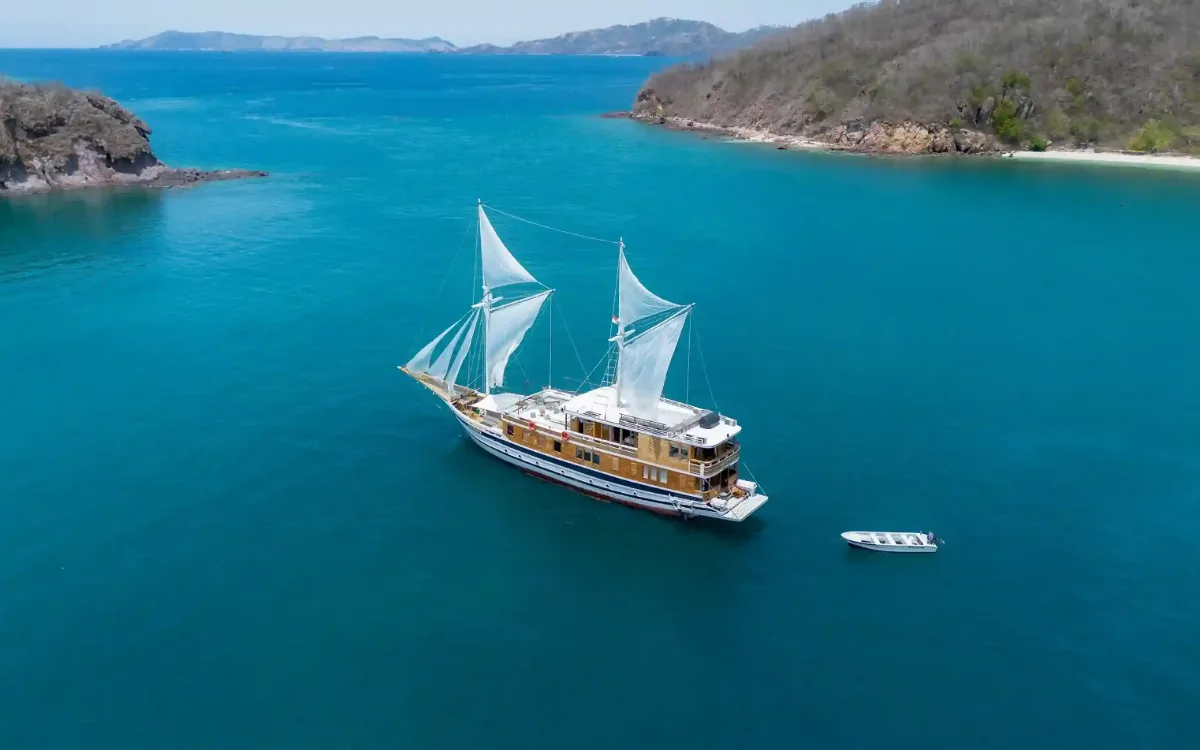
Komodo open trip means a shared cabin on a scheduled Phinisi departure rather than chartering a whole boat — you book one bunk, join 8 to 15 other travelers, and split the cost of the crew, fuel, and permits. Komodo Luxury’s Komodo Open Trip 3D2N share-cabin voyage starts from USD 300 per person and sails Padar Island, Pink Beach, Komodo Island, and Manta Point on a fixed schedule — no need to fill a boat yourself to get the classic Komodo route.

What Is a Komodo Open Trip, Exactly?

An open trip — sometimes called a share trip or shared cruise in Labuan Bajo listings — is a Phinisi sailing departure that runs on a set calendar whether one cabin sells or all of them do. You reserve a bed inside a shared cabin (bunk-style, usually 2 to 4 guests per room, sorted by gender on request where possible) or a private cabin on the same shared boat, and the operator fills the rest of the vessel from other bookings. The itinerary, meals, and stops are fixed for everyone on board, which is what keeps the per-person price down compared to Flores Island Tour Packages and Prices.

This is different from a group tour booked as one party through a single agent — on an open trip, your fellow passengers are strangers from separate bookings, often a mix of nationalities, solo travelers, couples, and small groups of friends. For many first-time visitors that is the appeal: it is the easiest way to meet other travelers on a multi-day Komodo sailing.

Komodo Open Trip Schedule: Weekend vs Weekday

Labuan Bajo operators run two standard weekly patterns for the 3D2N share-cabin format:

Feature Weekend Open Trip Weekday Open Trip
Departure window Friday to Sunday Monday to Wednesday
Duration 3 days, 2 nights 3 days, 2 nights
Group atmosphere More social, higher demand Quieter, fewer cabins sold
Best suited to Fixed-holiday travelers, solo travelers wanting company Digital nomads and flexible schedules, quieter boat

Both patterns cover the same core Komodo National Park stops. If your dates are flexible, the weekday departure is usually the easier one to book on short notice, since Friday–Sunday cabins sell out first during July–September peak season.

What Does a Komodo Open Trip Itinerary Cover?

The standard 3D2N route sails from Labuan Bajo harbour and back, with variations depending on tide and weather:

  • Day 1: Boarding in Labuan Bajo, sail to Rinca Island for a Komodo dragon trek with a park ranger, then Kalong Island at dusk to watch fruit bats leave the mangroves.
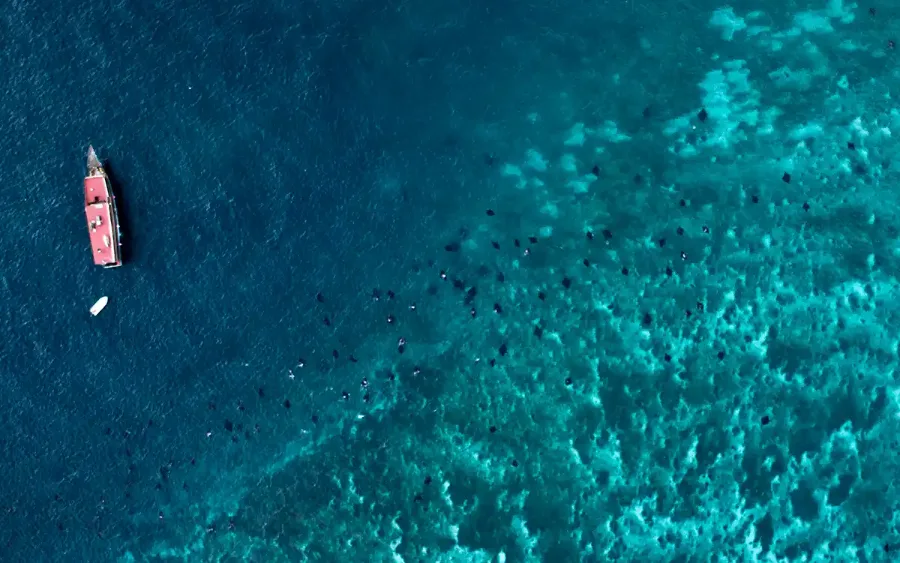
  • Day 2: Sunrise hike on Padar Island, snorkeling stop at Pink Beach, Komodo Island trek for a second dragon-viewing chance, then snorkeling or diving at Manta Point (Karang Makassar) if manta rays are active.
  • Day 3: A final snorkel stop — commonly Kanawa Island or Sebayur Island — before returning to Labuan Bajo harbour by early afternoon.

Meals, drinking water, snorkeling gear, and a guide are included in the share-cabin price; park entrance tickets, the conservation fee, and diving add-ons (if you dive rather than snorkel) are usually paid separately. See our Flores and Komodo FAQ for a full breakdown of what national park fees actually cover.

How Much Does a Komodo Open Trip Cost?

Cabin pricing depends on the boat and room category rather than a single flat rate. On Komodo Luxury’s open-trip listings, shared bunks on a mid-range Phinisi start from USD 300 per person for the 3D2N voyage; private cabins on the same shared boat run higher — Superior cabins from around USD 450, Deluxe from around USD 530, and an exterior master cabin from around USD 570 per person on some vessels, all quoted per person and confirmed at booking since fleet and season shift the numbers. That per-person cost includes the crew, boat, fuel, and meals split across a full cabin list, which is the entire reason a shared trip is cheaper than a private charter of the same route — see our Flores Island Tour Packages and Prices catalogue for how open trip pricing compares with private and combo formats.

Open Trip vs Private Trip: Which Should You Book?

The trade-off is simple: an open trip is cheaper per person but fixed — you cannot change the stops, meal times, or route once the boat sails, and you share bathrooms and common areas with strangers. A private charter costs more overall but lets your group set the pace, choose which islands to linger at, and pick departure times that suit you. Group travel activities on a shared boat work well for solo travelers, couples on a budget, and anyone comfortable with communal sleeping arrangements; families with young children and travelers who get seasick easily in shared quarters generally do better on a private Flores or Komodo charter instead.

Budget Travel in Labuan Bajo Before and After the Boat

An open trip is usually one piece of a wider backpacking Flores island budget, since most travelers spend at least one night in Labuan Bajo town before boarding and after disembarking. The town has a genuine hostel and budget-guesthouse scene clustered around the harbour and along the main strip up the hill, with dorm beds and simple private rooms considerably cheaper than the resort-style hotels aimed at private-charter guests. Staying near the harbour matters more than star rating here — boats board early, usually between 8 and 9 a.m., and a five-minute walk beats a paid taxi at that hour. If your flight lands the same day your boat departs, build in a buffer: flight delays into Komodo Airport are common enough that same-day boarding is riskier than it looks on paper.

Cash matters on a budget itinerary too. ATMs in Labuan Bajo can run out of cash or go offline, particularly on weekends, so withdraw what you need for the boat, tips, and park fees a day ahead rather than assuming a machine will be working the morning you leave.

Group and Backpacker Travel: Practical Notes

Because the whole point of the open trip format is splitting cost across strangers, a few practical habits make the experience smoother. Bring earplugs and a sleep mask — shared cabins on a moving boat are noisier and brighter at dawn than a hotel room. Pack light: storage per bunk is limited to a small shelf and under-bed space. Bottled or filtered water is standard on board; do not expect drinkable tap water anywhere in Flores, on land or at sea. If safety is a concern, especially for solo female travelers, ask the operator directly how cabins are assigned by gender before booking, since policy varies by boat.

What’s Included and What You Pay Separately

Usually included Usually paid separately
Cabin or bunk, boat, and crew for the full itinerary Komodo National Park entrance ticket and conservation fee
Three meals a day plus drinking water on board Alcoholic drinks and soft drinks beyond the standard water
Snorkeling mask, fins, and life jacket Scuba diving tanks, weights, and dive guide fee if you dive rather than snorkel
English-speaking guide for island treks Ranger tip and gratuities for guide and crew
Rinca and Komodo Island trekking permits arranged on your behalf Airport transfer to and from Labuan Bajo harbour, unless stated at booking

Ask the operator to confirm this split in writing before paying a deposit — it is the single biggest source of misunderstanding on shared trips, since some boats bundle the park fee into the cabin price and most do not.

What to Pack for a Shared Cabin Boat

Space is tighter on a share-cabin Phinisi than on a private charter, so pack accordingly: a soft duffel bag rather than a hard suitcase, reef-safe sunscreen (many boats now discourage oxybenzone-based sunscreen near the coral), a light long-sleeve layer for sun protection during the Padar hike, closed-toe shoes for the Komodo and Rinca dragon treks, a dry bag for phones and cameras during snorkeling stops, and any seasickness medication you know works for you — the crossing between islands can get choppy outside the June–September dry-season window. Cabins rarely have individual power outlets, so a portable power bank is worth carrying for two full days without reliable charging.

Best Months to Book a Komodo Open Trip

Open trip departures run year-round, but conditions on board and underwater shift by season. The dry season from roughly April to November brings calmer crossings between islands and the clearest snorkeling visibility, with July to September the busiest and most social months for meeting other travelers — book at least three to four weeks ahead in that window since cabins sell out fastest. December to March brings more rain and rougher seas on some crossings, but also thinner crowds and easier last-minute availability. For manta ray sightings specifically, boats time the Manta Point stop around tidal movement rather than season, so ask your operator which day of the itinerary includes the best current window for that stop.

Odds and Ends Readers Ask About

What is the difference between an open trip and a share trip in Labuan Bajo?

They are the same thing under two names used interchangeably in Labuan Bajo listings — a fixed-schedule Phinisi departure where you book one cabin or bunk rather than the whole boat, and the operator fills the remaining spaces from separate bookings.

How many people share a Komodo open trip boat?

Most 3D2N share-cabin Phinisi vessels carry between 8 and 15 guests, spread across shared bunks and a smaller number of private cabins on the same boat, though capacity varies by vessel.

Is a Komodo open trip safe for solo female travelers?

Many solo women travel on Komodo open trips without issue, and reputable operators can arrange same-gender cabin sharing on request — confirm this directly with the operator before paying, since it is not guaranteed by default on every boat.

Can I upgrade from a shared cabin to a private one on the same open trip departure?

Yes — most open trip boats sell both shared bunks and private cabins on the identical fixed itinerary, so you can pay more for a private room while still sailing on the scheduled group departure rather than chartering separately.

Does the Komodo open trip price include the national park entrance fee?

Usually not. The cabin price covers the boat, crew, meals, and guide; Komodo National Park entrance tickets and the conservation fee are typically paid on arrival at the ranger post and are not bundled into the advertised cabin rate.

Plan around it: read how to combine an open trip with a Bali arrival, check which months suit manta snorkeling and calmer seas, and see the Padar and Rinca land experience before you sail.

How Shared Komodo Trips Work for Different Traveller Types

The group open trip Komodo format appeals to a wide mix of travellers, from solo backpackers to couples and small groups. For budget travellers, open-trip departures offer the lowest per-person prices while still including main highlights like Komodo Island, Padar, and Pink Beach. The cost is kept down by sharing cabins and meals, and following a set itinerary with a fixed crew, rather than negotiating your own boat hire.

Solo travellers in particular benefit from open trip Labuan Bajo Komodo options, since you can book a single bunk without paying extra for unused beds. Cabins are usually arranged by gender on group boat trip Flores departures, making it practical for solo women and men alike. Many operators encourage mingling during meals and activities, and most passengers are backpackers or independent travellers, so it’s easy to find company both on and off the deck. The shared format means you avoid single supplements, making the average price of Komodo boat trip accessibly low compared to private charters.

Many open trip Komodo from Flores departures also coordinate with dive operators, so scuba diving Komodo for solo travellers is possible if you pre-arrange the correct package. However, standard open trips focus on snorkelling and the main islands — if you want guaranteed diving stops, seek a dedicated dive trip. Open trip Flores boats use a standard 3-day, 2-night route, but some run longer or shorter itineraries, offering flexibility for different budgets and schedules. These group trips are scheduled in advance and fill up quickly during holiday seasons, so booking early is advisable, especially for solo travellers keen on lower prices and social atmosphere.

More Questions Answered

How much does a Komodo boat trip cost?

A shared Komodo boat trip starts from USD 300 per person for a standard 3-day, 2-night itinerary, or from USD 220 on weekday departures. High season (June–September) rates are at the upper end, while off-season trips may be cheaper. Upgrades to private cabins or luxury boats cost more, but the basic price includes meals and guided stops at key islands.

What is the group size on a shared Komodo open trip?

Most Komodo open trip boats carry 8 to 18 passengers, with 3 to 5 cabins depending on the vessel. Larger boats may host up to 20. This group size is small enough for a sociable atmosphere but not crowded. Expect to share common spaces and group activities like snorkelling or trekking.

Is scuba diving possible on a Komodo open trip for solo travellers?

Some open trips offer scuba diving add-ons for solo travellers, but these must be booked in advance and depend on the day’s route. Standard itineraries focus on snorkelling and island visits. Dedicated liveaboard dive trips are a better choice for multiple dives or full diving days.

Can I join an open trip Komodo from Flores if I am travelling alone?

Yes, solo travellers routinely join open trip Komodo departures from Flores, booking a single bunk in a shared cabin. You’ll travel with a mixed group of other individuals and small parties, with no single supplement. This makes open trips the most budget-friendly option for solo visitors.

Ready to turn this into a booked trip? Where planning turns into a booking, that is Komodo Luxury: shared Komodo open trips, Labuan Bajo tours or Komodo boat tours. Send your dates and group size to the booking desk on WhatsApp at +62 811-3823-875, or email sales@komodoluxury.com, and ask specifically about the open-trip explainer above. Written enquiries go to sales@komodoluxury.com.