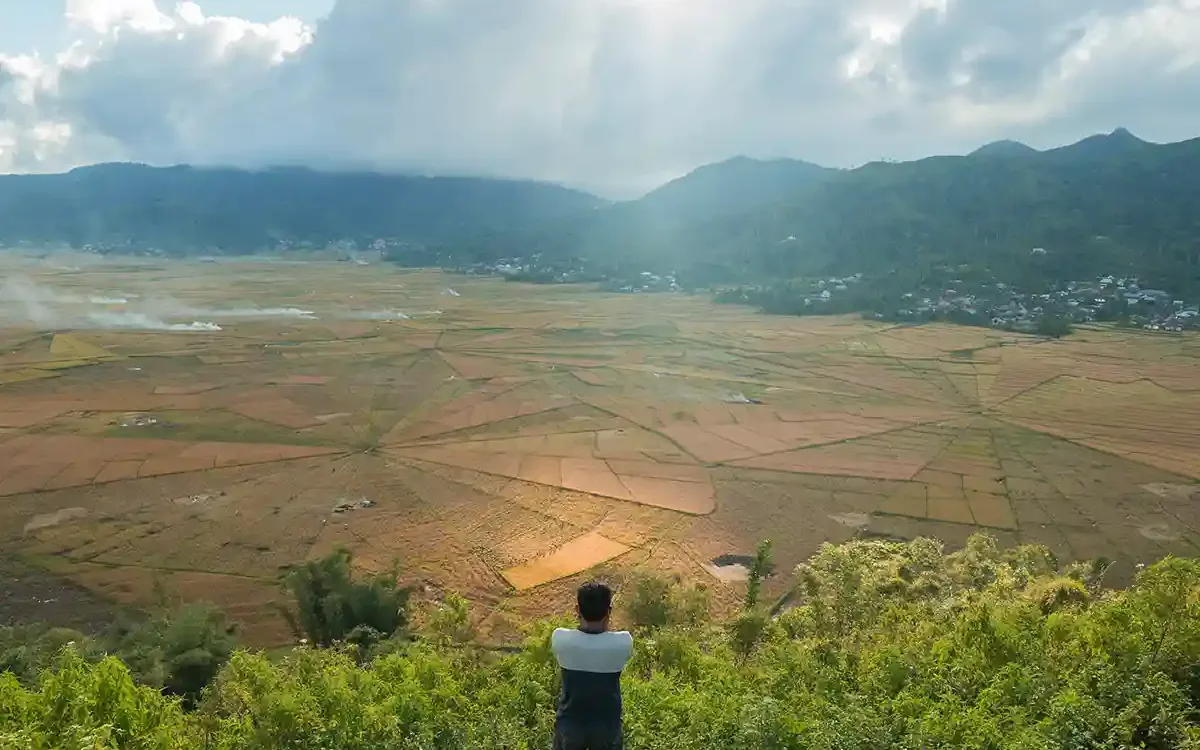
Shortest drive
2D1N departing Ruteng
USD 180 from, per person, two sharing
Already in the highlands: 2.5–3 hours to the trailhead rather than a full day of road.
- Two travellers
- from USD 180
- Four travellers
- from USD 140
2D1N trek · Silo 1
A drive to the Denge trailhead, a 3–4 hour forest climb, and a night inside one of the seven mbaru niang. There is no road to Wae Rebo, and that is the point.
Overnight capacity is capped. Confirm two to three weeks ahead, earlier in peak season.
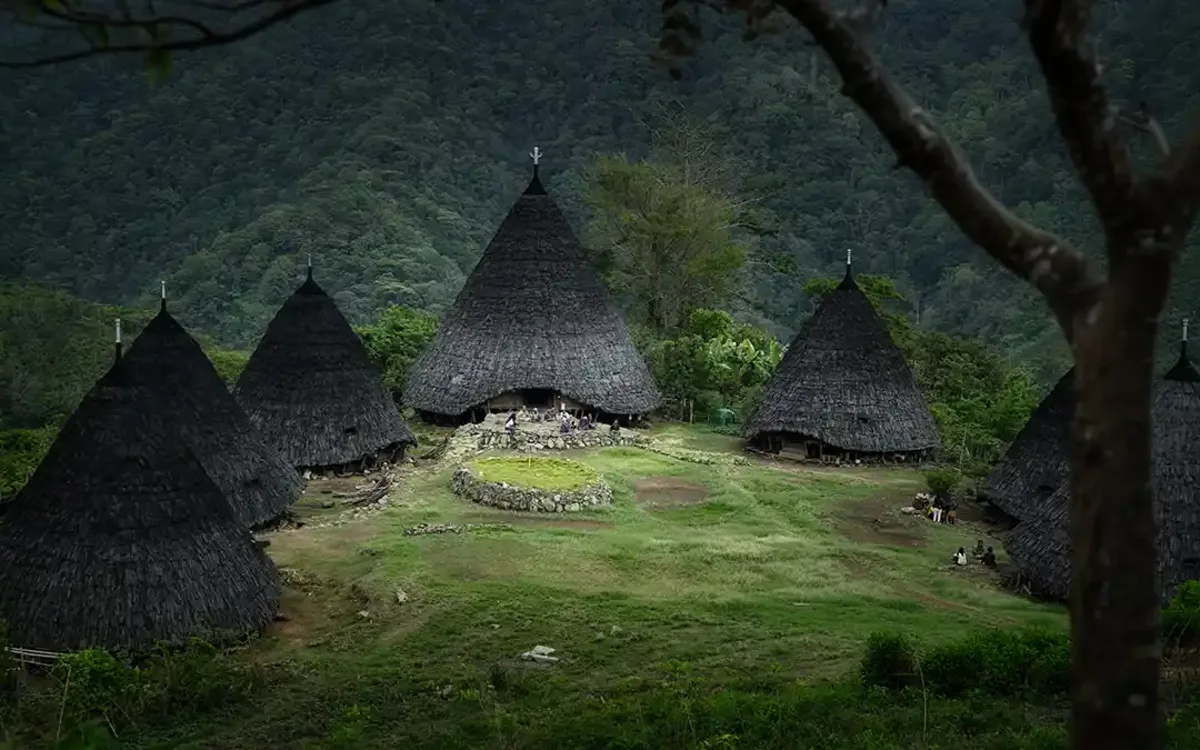
7 houses
Mbaru niang in the village
3–4 hrs
Uphill trek from Denge
4–6 km
Trail length, on foot only
~1,100 m
Village altitude
The trek
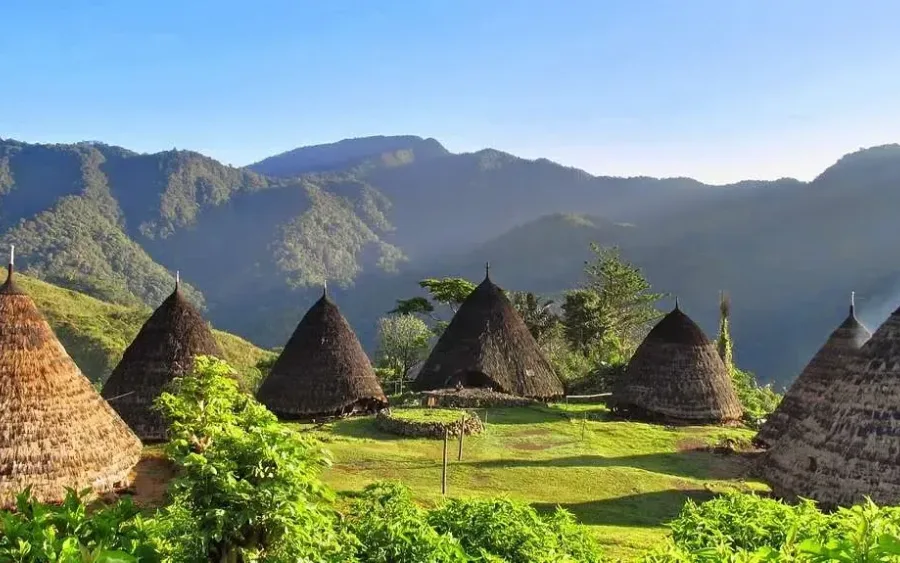
You do not need trekking experience. You do need reasonable fitness. The trail climbs steadily through forest for 4–6 km, gaining several hundred metres over packed earth and roots that turn muddy after rain.
Anyone who can walk uphill at a steady pace for three to four hours with rest stops manages it comfortably. Guests with knee, hip or cardiovascular conditions should think twice — once you start, there is no vehicle shortcut.
Broken-in shoes with grip, a rain layer and a headlamp all help. Porters at the trailhead carry overnight bags for a small fee paid on the spot. Children and older travellers do complete it; the guide sets the pace to the slowest walker.
Inclusions
One booking covers the full loop, from hotel pick-up to the walk back down.
Before you go
Not a museum. Guides brief this before departure; it is worth arriving already knowing it.
Indicative 2026
Starting prices per person. Planning estimates, not fixed quotes — transport, guide and village fees are reviewed periodically.
Prices include car and driver, trekking guide, village donation, accommodation and stated meals. Flights, insurance, tips and the porter fee are separate. Combining Wae Rebo with the crater lakes? Ask for both legs quoted together.
Booking
The village takes a set number of guests each night, so the date is the thing you secure first.
Trek date, group size, and whether you would rather start from Labuan Bajo or Ruteng.
A day-by-day itinerary, the per-person price for your group size, and a packing checklist.
A deposit secures the overnight capacity — it fills in the July–August peak.
Driver and trekking guide confirmed before pick-up day, and the desk stays reachable on WhatsApp throughout.
One stop among several
Wae Rebo sits on the Trans-Flores route between Labuan Bajo and Kelimutu. On a 6-day overland itinerary the trek is a built-in night rather than a separate booking with its own repositioning drive.
Trek questions
The practical ones, answered without softening.
For the full set, see our FAQ — 135 questions answered.
Yes. Overnight capacity is limited to a set number of guests per night and fills in the April–November dry season and around holidays. Confirm two to three weeks ahead, earlier in peak season.
It is possible on a tight schedule, but it means trekking up and back the same day and leaving before the village settles into its evening. The overnight is what most people came for.
Yes. Wae Rebo does not permit unguided visits, and the local trekking guide is included in the package rather than optional.
By road to Ruteng (about 4 hours), then 2.5–3 hours on to Denge, then 3–4 hours uphill on foot. Public transport does not reach Denge, so a private vehicle is the practical option. Leaving before sunrise gets you in before dark.
No. The road ends at Denge. Every visitor walks the final 4–6 km uphill; there is no vehicle access to Wae Rebo itself.
Broken-in shoes with grip, a rain layer, a headlamp, and warm layers — the village sits above 1,100 m and the evening is genuinely cool. There is no hot water and no phone signal.
Communal. You sleep on mats inside a mbaru niang alongside other travellers, with shared bedding and basic blankets. Dinner is rice, seasonal vegetables and eggs or chicken, served family-style, with village-grown coffee afterwards.
As a gateway, yes — it has the best facilities in west Flores and the Komodo boats leave from there. As a destination in itself it is a busy harbour town, and the reason to stay is what leaves from it.
Talk to Komodo Luxury
This guide publishes the research. Komodo Luxury holds the cars, the guides and the overnight slots, and replies with a written plan.
No obligation, and no price here changes because you asked.