
Flores and Komodo follow Indonesia’s monsoon-driven climate pattern classified by BMKG: a dry season running roughly April through November and a wet season roughly December through March, with the driest, calmest sailing conditions typically falling between June and September and the wettest, roughest conditions typically falling between December and February. This is a general seasonal pattern, not a monthly forecast — always check a near-term forecast before travel rather than planning around seasonal averages alone.
What Is Flores’ Climate Pattern, and Who Classifies It?
Indonesia’s national meteorological agency, BMKG (Badan Meteorologi, Klimatologi, dan Geofisika), classifies Flores and the wider East Nusa Tenggara region as having a monsoonal climate with a pronounced dry season — among the drier parts of Indonesia during peak dry months, in contrast to the more consistently wet climate of Sumatra or Kalimantan. The practical effect for travelers is a genuinely distinct high season (dry, calmer seas, better sailing and diving visibility) and low season (wetter, rougher seas, higher landslide and road-closure risk on the Trans-Flores highway) rather than a climate where every month looks similar.
Flores Seasons at a Glance
| Period | General pattern | Sailing/sea conditions | Crowd level |
|---|---|---|---|
| June–September | Core dry season | Calmest, most reliable sailing window | Peak — July/August busiest |
| April–May, October–November | Shoulder/transitional months | Generally good, more variable than peak dry | Moderate, fewer crowds than peak |
| December–February | Core wet season | Roughest seas, higher chance of sailing cancellations | Spikes around Christmas/New Year despite weather, otherwise quieter |
| March | Late wet season, transitioning | Improving but still variable | Quieter, shoulder pricing common |
Treat this as a general seasonal pattern rather than a monthly guarantee — for exact rainfall and wind data ahead of a specific trip, BMKG’s own regional forecasts and marine weather bulletins are the authoritative source, updated far more frequently than any static seasonal table can be.
What Is Peak Season on Flores, and Why?
July and August are Flores’ busiest months, driven by a combination of reliably dry, calm conditions and Northern Hemisphere summer holiday timing — European and North American school breaks push family and group travel into exactly this window. See our Indonesian holidays and peak season guide for how this overlaps with domestic Indonesian holiday periods too, since both dynamics push prices and availability in the same direction at once. Boats, hotels and drivers should be booked well ahead for travel in this window — our Komodo trip-length guide covers realistic lead time for booking a liveaboard specifically.
What Is the Dry Season Like for Diving and Sailing?
June through September generally brings the calmest seas and most consistent visibility for Komodo diving and sailing, which is part of why it lines up with peak booking season rather than being a coincidence. Even within the dry season, conditions at specific dive sites vary — sites in the park’s south, like Manta Point, can bring cooler water and stronger swell in certain dry-season months due to seasonal upwelling patterns, which is a separate dynamic from general rainfall and worth asking a dive operator about directly if diving specific sites is your priority.
What Is the Wet Season Like, and Should I Avoid It?
December through February is Flores’ wettest, roughest period — sailing cancellations become more likely, the Trans-Flores highway carries a higher landslide and road-closure risk after heavy rain, and some liveaboard operators reduce sailing frequency. This does not mean the wet season is untravelable; it means realistic expectations and flexible planning matter more. Lower prices, thinner crowds, and lush green overland scenery are genuine wet-season upsides for travelers willing to build slack into their schedule for possible weather delays, both on the water and the road.
When Is Low Season, and What Are the Trade-offs?
Outside the Christmas/New Year spike, the core wet-season months (particularly January and February) are Flores’ quietest for tourist volume, generally the best window for lower accommodation rates and easier last-minute availability. The trade-off is real: rougher seas raise the chance of a Komodo boat day being postponed or rerouted, and overland travel timing should build in extra buffer versus dry-season driving-time estimates. Travelers with flexible dates and a tolerance for weather-dependent itinerary changes benefit most from booking low season.
How Does Weather Affect Overland Travel Specifically?
Wet-season rain increases landslide risk and can slow travel on mountain stretches of the Trans-Flores highway between Labuan Bajo, Ruteng, Bajawa, Ende and Moni — see our Flores distances and driving times guide for dry-season baseline hours, and add buffer time if traveling in wet-season months. A private driver familiar with current road conditions, rather than a fixed-schedule shared vehicle, gives you the most flexibility to adjust a route if a section is temporarily affected.
How Does Weather Differ Between Western and Eastern Flores?
Flores is long enough that weather is not perfectly uniform island-wide on any given day — the western end around Labuan Bajo and Komodo National Park sits in a drier microclimate typical of the Lesser Sunda Islands’ western chain, while the eastern end toward Maumere can see somewhat different rainfall patterns tied to its own local geography and exposure. This means a “dry season” designation for Flores broadly can still see localized rain showers on the eastern end even during peak dry months further west, and vice versa — a good reason to check a location-specific forecast rather than relying on an island-wide seasonal label alone when your itinerary spans the full overland route.
How Does the Season Affect Kelimutu and the Overland Highlands?
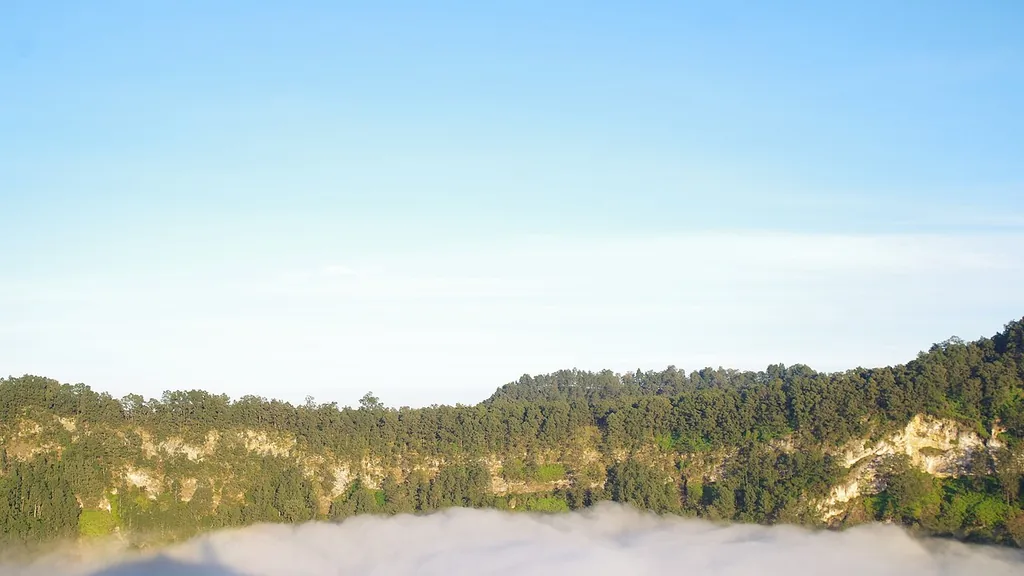
Higher-elevation stops on the overland route — Bajawa’s highlands, Kelimutu’s crater rim near Moni — run noticeably cooler than coastal Labuan Bajo year-round, and cloud cover affecting Kelimutu’s famous sunrise crater-lake views is a real, somewhat unpredictable factor regardless of season; dry-season months improve your odds of a clear sunrise but do not guarantee one. Travelers with flexible itineraries sometimes build in a buffer day near Moni specifically to allow a second sunrise attempt if the first is clouded out.
What Sources Should You Check for a Near-Term Forecast?
BMKG’s own website and mobile app provide the most authoritative near-term Indonesian weather forecasting, including marine weather bulletins relevant to boat sailing conditions specifically — these are considerably more useful in the days before travel than any seasonal-average table, including this one, which describes general patterns rather than a specific week’s conditions. International weather apps that pull from global models can also be useful for a general read but are generally less precise for Indonesia’s localized monsoon patterns than BMKG’s own domestic forecasting.
Frequently Asked Questions
What is the single best month to visit Flores?
There is no single objectively “best” month — July and August offer the most reliable dry-season conditions but the highest prices and crowds; the April–May and October–November shoulder months often give a strong balance of good weather and fewer crowds; the wet season trades weather reliability for lower prices and quieter sites. The right choice depends on your priorities.
Is it safe to visit Flores during the rainy season?
Yes, with realistic planning — build flexibility into your itinerary for possible boat rescheduling or road delays, and check near-term BMKG forecasts before finalizing day-by-day plans rather than relying on seasonal averages alone.
When does the Komodo sailing season typically start and end?
Sailing conditions are generally most favorable from April through November, aligning with the dry and shoulder seasons, though individual operators may adjust their own sailing calendar based on specific-year conditions and demand.
Does Flores have a hurricane or typhoon season?
Indonesia, including Flores, sits outside the main Western Pacific typhoon belt and does not experience tropical cyclones in the way the Philippines or northern Australia can; the main weather risk on Flores is monsoon rainfall and associated sea conditions rather than cyclonic storms.
How Do Seasonal Winds Affect Sailing Specifically?
Beyond rainfall, prevailing wind direction shifts with the monsoon and affects which anchorages and sailing routes are most comfortable at different times of year — experienced Komodo boat captains adjust anchoring choices and, at times, itinerary order based on the season’s dominant wind direction rather than sailing the identical route year-round regardless of conditions. This is one reason a fixed day-by-day itinerary you find published online may be adjusted on your actual sailing; a competent captain prioritizing guest comfort and safety over a rigidly followed script is a good sign, not a shortfall.
Plan Your Trip Around the Right Season
Tell Komodo Luxury your travel window and they will flag anything season-specific worth knowing before you commit to dates — including whether your preferred month favors a liveaboard, an overland-heavy itinerary, or a mix. See the Flores Island tour packages and prices for structured options across seasons.
Last updated: August 26, 2026. Seasonal classification: BMKG (Badan Meteorologi, Klimatologi, dan Geofisika) monsoon climate zoning for East Nusa Tenggara.
Once the month-by-month weather picture here has settled your dates, the next move is putting them in front of the desk at Komodo Luxury’s Labuan Bajo tour desk.
If that format is not quite what you want, Labuan Bajo yacht rental is listed on its own. Two ways to book the same days: one-day Komodo trip packages, or shared open-trip departures for a different shape of trip.
Flores Island Weather by Month: What to Expect Seasonally and When
Flores Island weather patterns are driven by the Southeast Asian monsoon cycle, creating a distinct wet and dry rhythm across the island. Rainfall varies considerably from west to east, but most areas follow a reliable template: the wet season (locally called the rainy season) generally spans December to March, with the dry season taking over from April to November. During the core of the wet months, notably December and February, short, intense downpours and humid afternoons are common, sometimes making rural roads muddy or temporarily impassable.
Flores island weather in March sits at the tail end of the heavy rains; travel is possible, but expect variable conditions. June, by contrast, is when the dry weather settles in, which makes it one of the best months for overland driving, hiking and dependable boat crossings. July and September run much the same way: little rain, calm seas, clear skies. Families, divers and anyone chasing the Kelimutu sunrise get the best odds between July and September. This block of time usually delivers the most stable conditions for both land and sea activities.
The shoulder months — April, May, October and November — are the unpredictable ones, and no month-by-month table will save you from that. Against Bali in October, Flores is drier and less humid, though localised showers still turn up, most often in the west of the island and around Komodo. Labuan Bajo weather by month closely mirrors these trends, though the harbour may see brief choppy periods during seasonal shifts.
For diving, the prime window is between May and September—flores island weather for diving is at its calmest, with visibility often exceeding 20 metres. Hikers and families will also find these months preferable, as trails and roads across the island are at their safest. The climate is monsoon-driven, but storms and typhoons are extremely rare here. The real wet-season risk is localised flooding and short road closures, not severe weather. Check a current forecast before you travel. Conditions shift quickly, and they shift fastest at altitude. By following a month-by-month approach, you can plan your route and activities to avoid the worst of the rain while making the most of what the island’s weather offers year-round.
More Questions Answered
When is the rainy season on Flores?
The rainy season on Flores runs from December to March, with the heaviest rainfall between December and February — enough to leave rural roads muddy or briefly impassable. Build extra travel time into any itinerary that falls inside that window.
What is the best month to dive Komodo?
May through September is the best window to dive Komodo, when seas are calm and underwater visibility peaks—often above 20 metres. July and August see the most visitors, so consider May, June, or September for excellent conditions and fewer crowds.
When is the best weather for Kelimutu?
The best weather for Kelimutu is during the dry season, from April to November. These months offer reliably clear mornings for sunrise views, minimal rain, and better road access. July and August are busiest, so early June and September combine good weather with smaller crowds.
WhatsApp +62 811-3810-8110 or email sales@komodoluxury.com.
Sumber
Keep reading
More from the journal
-
Practical & Costs
Flores Travel Scams and How to Avoid Them
Most problems travelers report from Flores and Komodo trips trace back to a small number of recurring patterns — not…
10 min Read -
Practical & Costs
Travel Insurance for Flores and Komodo
Travel insurance for Flores and Komodo needs to cover three things standard policies sometimes exclude by default: scuba diving (even…
11 min Read -
Practical & Costs
SIM Cards, eSIM and Internet in Flores
Telkomsel has the widest and most reliable mobile coverage across Flores, including Labuan Bajo and the more remote stretches of…
11 min Read