
Photography Spots Across Flores and Komodo
Terakhir diperbarui: 26 Agustus 2026.
What Are the Best Photography Spots in Flores and Komodo?
Flores rewards photographers who plan around light and timing rather than just location. The island’s two signature shots — Padar’s striped bays and Kelimutu’s colored lakes — both depend on being in position before sunrise, not just visiting at some point during the day. Below is a working list organized by region, with the timing detail that actually determines whether a shot works.
Komodo National Park and the Labuan Bajo Coast
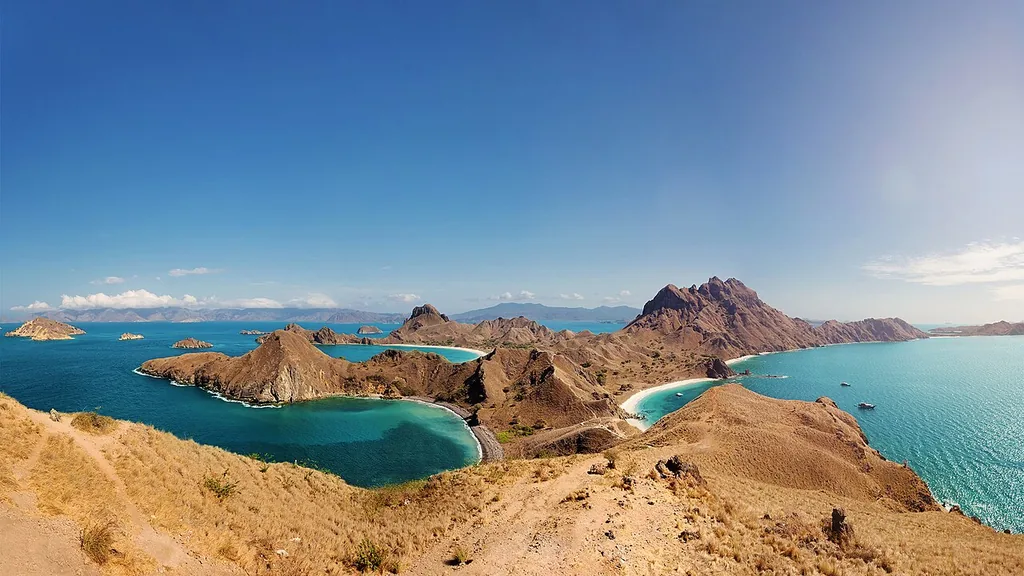
Padar Island Viewpoint — Best at Sunrise
The single most photographed view in the park: three curved bays with different sand colors, seen from the summit trail roughly 30 to 45 minutes up from the boat landing. Boats that arrive after 8am share the viewpoint with several other groups, and haze builds through the morning — an early-departure boat reaching Padar before 7am gets noticeably clearer light and a near-empty summit. See the Labuan Bajo tour packages page for operators who can build an early-Padar itinerary rather than a standard mid-morning schedule.
Pink Beach — Midday Water, Golden-Hour Sand
Underwater and shallow-water shots work best around midday when the sun is directly overhead and light penetrates the water clearly. For sand-color and landscape shots specifically, the pink tint reads more strongly in warmer late-afternoon light than under a flat midday sun — if your itinerary allows a choice, ask for an afternoon stop here rather than a midday one.
Bukit Cinta and Bukit Sylvia, Labuan Bajo — Sunset
Both hills overlook Labuan Bajo’s harbor and the scattering of small islands beyond it, and both work as sunset viewpoints reachable by a short drive or a moderate walk from town. Bukit Cinta (“Love Hill”) is closer to the harbor; Bukit Sylvia sits slightly further out with a wider, less crowded view. Arrive 30 to 45 minutes before actual sunset to secure a clear vantage point, since both draw a steady stream of visitors in peak season.
Kalong Island — Dusk Bat Exodus
Thousands of flying foxes leave Kalong Island’s mangroves at dusk, silhouetted against the sunset sky — a shot that depends entirely on being anchored nearby at the right few minutes, usually included as an overnight-anchorage stop on 2-day-plus boat itineraries rather than single-day trips. See Komodo phinisi charter for multi-day routes that include this stop.
Overland Flores: Villages, Volcanoes and Crater Lakes
Kelimutu Crater Lakes — Sunrise From the Rim
The three differently-colored volcanic lakes are the other signature Flores shot, reached via a pre-dawn drive from Moni village followed by a short walk to the main viewpoint. Arrive at the parking area with enough buffer to walk up in the dark using a headlamp — most visitors aim to be on the rim 20 to 30 minutes before actual sunrise, since the color shift on the lakes is most dramatic in the first direct light. Cloud cover at altitude is common and unpredictable, so build in flexibility if photography is your main reason for the detour.
Cancar Spider-Web Rice Fields, Ruteng — Mid-Morning
The circular, web-patterned rice terraces near Ruteng photograph best from an elevated roadside viewpoint in mid-morning light, once the fields have enough sun to show the pattern clearly but before midday flattens the shadows that define the web shape. This is a roadside stop on most overland routes between Labuan Bajo and Bajawa, not a dedicated excursion.
Wae Rebo Village — Overnight for the Best Light
Wae Rebo’s seven cone-shaped traditional houses sit in a highland clearing reached by a 3 to 4 hour trek. Day-trippers get flat midday light; travelers who stay overnight get low morning mist over the houses and warmer late-afternoon light on the thatched roofs — a meaningfully different result for the same subject. Budget the extra day if photography of the village itself, not just the trek, matters to your trip.
Bena Traditional Village, Near Bajawa
Megalithic stone structures and traditional Ngada houses arranged around a central ceremonial space, with Mount Inerie volcano often visible behind the village on clear days. Late afternoon light works well here, and unlike Wae Rebo, Bena is a straightforward day visit rather than requiring an overnight stay.
Underwater and Marine Photography
Komodo’s dive and snorkel sites — Manta Point, Batu Bolong, Pink Beach’s reef — reward a proper housing or a dedicated underwater camera over a phone in a bag, given the current and depth involved at several sites. Visibility varies by season and site more than by time of day, so ask your dive or snorkel guide which specific spot has the clearest water on the day you’re out, rather than assuming any one site is reliably best year-round.
Do You Need a Drone for Good Photography Here?
No — every spot above is a ground-level or boat-deck shot. If aerial footage still matters to your trip, drones require a separate permit inside Komodo National Park; see our drone rules guide for the permit process and current fee reports before assuming you can fly without one.
Photographing People and Villages Respectfully
Traditional villages like Wae Rebo and Bena are lived-in communities, not staged sets. Ask before photographing individuals directly, particularly during ceremonies or inside homes, and follow your guide’s lead on which areas are open to photography and which are not. A small entry or guide contribution is standard at most village visits and is separate from any photography-specific request.
Camera Gear Recommendations for Flores and Komodo
- Wide-angle lens or ultra-wide phone setting: essential for Padar’s bay views and Kelimutu’s crater panorama — a standard zoom lens crops out the scale that makes both shots work.
- A rugged, weather-sealed body or a simple rain cover: boat spray and unexpected showers are common enough on Komodo trips that unprotected gear is a real risk.
- A dry bag, not just a camera bag: for the transition between boat deck and snorkel stops, where gear needs full water protection, not just splash resistance.
- A headlamp: both signature sunrise shots (Padar, Kelimutu) require walking in the dark beforehand.
Best Time of Year for Photography in Flores and Komodo
The dry season, roughly April through November, gives the clearest skies for both Padar and Kelimutu, with July and August as the driest but also the busiest months on the water. Shoulder months (April to June, September to November) often strike the best balance — reliable light with fewer boats sharing the same viewpoint at sunrise. Wet-season months (December to March) still produce usable light between showers, but plan more flexibility into a photography-focused itinerary, since a single missed sunrise due to cloud cover cannot always be rescheduled within a short trip.
Frequently Asked Questions
What is the single best sunrise shot in the whole Flores–Komodo region?
Most photographers rank it a close call between Padar Island’s bay view and Kelimutu’s crater lakes — they’re different enough (marine vs. volcanic landscape) that the honest answer depends on which subject you prefer, not which is objectively better.
Do I need a professional camera, or is a phone enough?
A recent smartphone handles most of these locations well, especially with an ultra-wide setting for Padar and Kelimutu. A dedicated camera helps most for underwater shots and low-light village photography, where phone sensors struggle more.
Can I fly a drone at Padar Island or Kelimutu?
Padar sits inside Komodo National Park, so the park’s drone-permit requirement applies there. Kelimutu is inside a different national park (Kelimutu National Park) with its own rules — confirm current drone policy for that specific park separately before assuming the same process applies.
What time should I arrive at Kelimutu for sunrise photography?
Most guides recommend leaving Moni village well before dawn so you’re on the crater rim 20 to 30 minutes ahead of actual sunrise, accounting for the walk up from the parking area in the dark.
Plan a Photography-Focused Itinerary
Tell Komodo Luxury photography is a priority when booking and they will weight your Komodo boat itinerary or overland route toward early departures and the right light windows, rather than a standard mid-morning schedule.
The shot list above gets you to a decision; a confirmation number comes from Komodo Luxury’s Labuan Bajo tour desk.
Where the shot list above ends, the operator’s own paperwork begins, and Komodo Luxury’s own FAQ is where those terms are published. Light dictates the shot list, but the boat dictates the light you get: a standard day departure reaches Padar well after sunrise, while an overnight puts you on the ridge for it. The fixed day formats, and where they sit in the morning, are listed under Komodo boat tours. For a trip measured in nights rather than hours, see Komodo liveaboard departures — worth a look once the shot list above is settled.
Flores vs Bali for Photography — Landscapes, Underwater, and Practicalities
The question of Flores vs Bali for photography depends on what you want to shoot and how much planning you are willing to do. Flores Island travel photography spots are dramatically less crowded, and subjects like the crater lakes at Kelimutu, the spider-web rice fields of Cancar, or the traditional mountain villages offer textures and local scenes that simply do not exist in Bali. However, Bali is generally easier for spontaneous photographers, with more infrastructure, and allows more flexibility for sunrise and sunset shoots without needing a local guide or permits.
Komodo National Park, reached from Labuan Bajo in western Flores, is now one of Southeast Asia’s top diving and snorkelling destinations, with underwater photography a particular highlight. The region’s reefs are exposed to strong currents, but the pay-off is a high chance of photographing manta rays, sea turtles, and macro life. Flores Island underwater photography Komodo sites like Batu Bolong and Manta Point see visibility from 15 to 30 metres (especially April–October), easily on par with or better than Bali’s North Coast dive sites. Underwater visibility drops briefly when the current runs, but through the dry season the clarity is excellent.
An official park guide is required for any land-based visit to Komodo, Padar, or Rinca islands, whether for dragon watching or photography. While you do not need a guide to snorkel or dive the marine sites, boats and operators are mandatory. Accommodation in Flores near diving spots is concentrated in Labuan Bajo, ranging from basic hostels to well-equipped dive resorts. Staying close to the harbour is best if you want to board early-morning dive boats or catch golden-hour light at the harbour’s edge.
In summary, for photographers seeking variety, raw landscapes and unique underwater life, Flores (especially Komodo) outshines Bali, provided you are ready for earlier starts, more logistics, and some mandatory guiding. Those who prefer easy logistics and a dense cluster of locations may still favour Bali, but the best light and most original scenes increasingly belong to Flores.
More Questions Answered
Can you drive across Flores Island?
Yes, you can drive the length of Flores Island, typically following the Trans-Flores Highway (Ruteng–Bajawa–Ende–Maumere). The full east–west journey covers 532 km and takes two to three days by car or minibus, given mountain terrain and roadworks. Night driving is strongly discouraged due to poor lighting and free-roaming livestock.
When is the clearest water in Komodo?
The clearest water in Komodo is usually during the dry season from April through November. Underwater visibility often exceeds 25 metres at dive sites like Batu Bolong and Manta Point in this period. Rainy months (December–March) can reduce clarity, especially near river outlets or after heavy weather.
Is there a local guide requirement for Komodo National Park?
Yes, a local ranger or guide is mandatory for every visitor landing on Komodo, Padar, or Rinca for trekking or photography. This protects tourists and the park’s wildlife. Guides are assigned at the entry point and fees are generally built into park or tour costs. No guide is required for marine-only activities.
Is accommodation in Flores near diving spots easy to find?
Yes, Labuan Bajo is the main base for divers and photographers heading to Komodo. The town offers everything from budget guesthouses to high-end dive resorts, most within ten minutes of the harbour. Booking ahead is essential in July–September, when both diving and dragon-watching see peak demand.
Ask the desk directly about anything in the shot list above: WhatsApp +62 811-3810-8110, email sales@komodoluxury.com.
Keep reading
More from the journal
-
Culture & Villages
What to Eat in Flores: Local Food Guide
Reading the food rundown costs nothing; booking it happens at Komodo Luxury. Planning stops here. The Komodo Luxury side takes…
3 min Read -
Culture & Villages
Volunteering and Giving Back in Flores
Real, verifiable conservation work is underway around Labuan Bajo — Coral Guardian and local NGO WES have restored reefs near…
9 min Read -
Culture & Villages
Flores Festivals and Ceremonies Calendar
Flores island's biggest cultural events — the Ngada highlands' Reba, the Manggarai harvest ceremony Penti, and the Portuguese-Catholic Holy Week…
11 min Read