
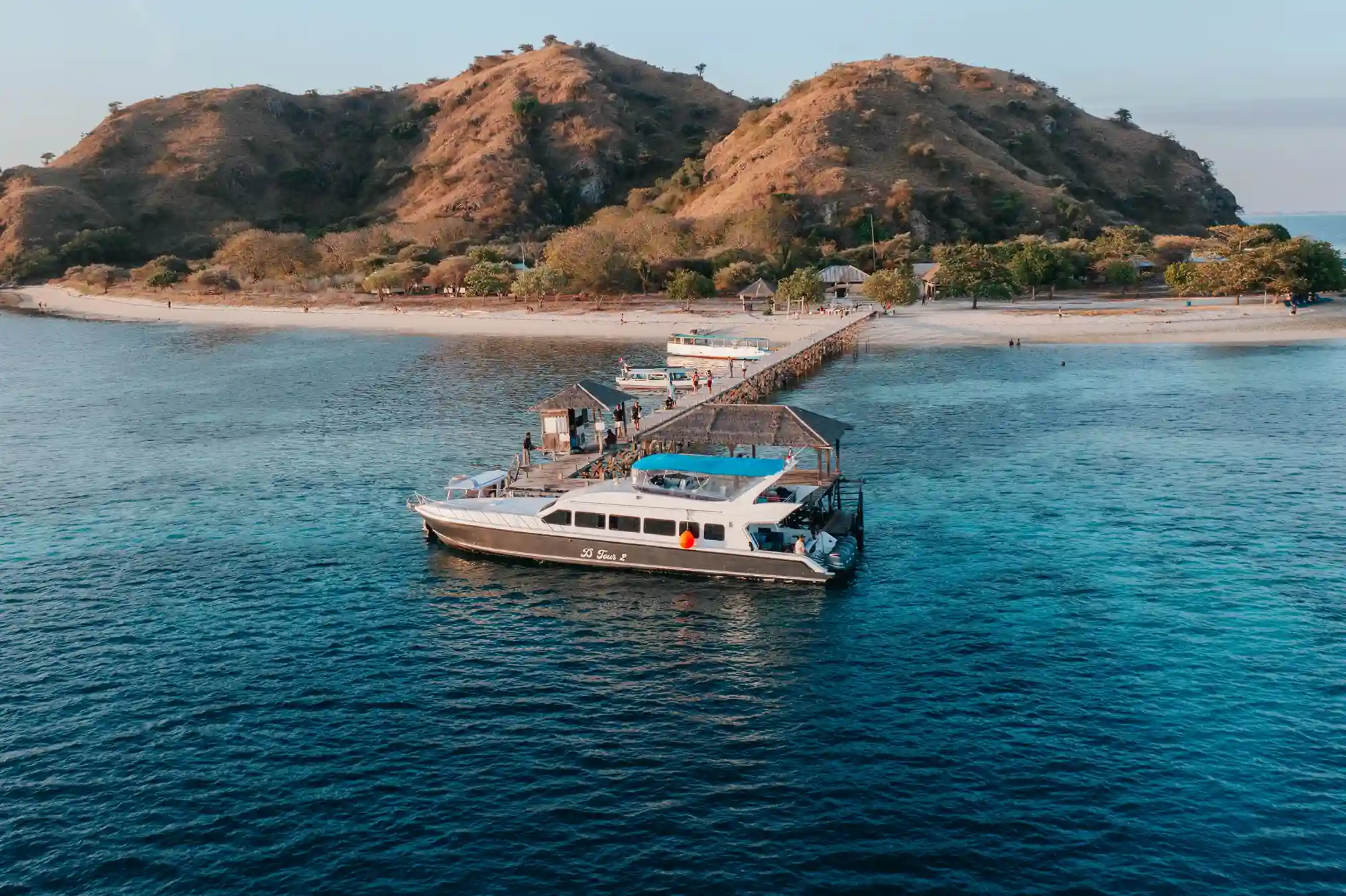
Beyond Komodo and Kelimutu, Flores’ real off-the-beaten-path spots include Riung’s 17 Islands Marine Park (protected, boat-accessed, quiet snorkeling), Cunca Wulang’s jungle canyon near Labuan Bajo, the Cancar spider-web rice fields near Ruteng, and Liang Ndara village for Caci whip-dance culture. Most require a dedicated detour off the main Trans-Flores route — that detour is exactly what keeps them uncrowded.
Off the Beaten Path in Flores
Komodo and Kelimutu carry Flores’ reputation, but the island’s quieter corners reward the extra planning it takes to reach them. These four are genuinely off the standard route rather than “hidden gems” that show up on every tour operator’s list — expect fewer facilities, fewer other travelers, and a bit more logistics.
Riung 17 Islands Marine Park
Officially Taman Wisata Alam Laut 17 Pulau Riung, this protected marine park sits off the north coast of Flores in Ngada Regency, 71 km north of Bajawa. There is no airport here — access is entirely overland, typically a 3.5 to 6 hour public bus ride from Bajawa, or a longer route via Ende and Moni. From Riung harbor, local boats take you island-hopping among the more than 17 small islands for snorkeling, with a marine park entrance fee of roughly IDR 100,000 for foreign visitors and full-day private boat charters running approximately IDR 700,000 to 1,500,000 depending on the number of stops. Riung is also known for a large flying-fox (fruit bat) colony visible leaving the mangroves at dusk. We cover the full logistics in our dedicated Riung 17 Islands boat tour guide.
Cunca Wulang Waterfall and Canyon
A genuine jungle-canyon detour close enough to Labuan Bajo to fit into a single day, Cunca Wulang sits near Wersawe village in the Mbeliling area of West Manggarai Regency. The draw is a series of turquoise river pools set in a narrow rock canyon, with natural rock formations that some visitors use for cliff-jumping (at your own risk and only with local guidance on safe spots). The site operates roughly 08:00 to 17:00 daily, with entrance tickets reported around IDR 50,000 to 100,000 depending on whether you book through a local guide or agency. Because it requires a drive into the hills followed by a short trek rather than a roadside stop, it stays noticeably quieter than in-town Labuan Bajo attractions like Batu Cermin Cave.
Cancar Spider-Web Rice Fields
Near the town of Ruteng in Manggarai Regency, the village of Cancar is known for its distinctive “spider-web” (lingko) rice field pattern — plots laid out in radial segments from a central point, a traditional Manggarai land-division system that happens to look striking from above. The fields are visible from roadside viewpoints and are a fairly easy stop by car or motorbike on the main Labuan Bajo–Ruteng route, making this one of the more accessible entries on this list despite its far lower profile than Komodo or Kelimutu. Light is best in the early morning when the terraces are freshly planted or the rice is still green, so timing your visit around planting season (rather than harvest, when the pattern is less vivid) makes a real difference to what you actually see.
Liang Ndara Village and Caci Culture
West Manggarai’s Liang Ndara village is a common half-day cultural stop from Labuan Bajo, best known for performances of Caci, the traditional Manggaraian whip dance — a ritualized, controlled combat performance between two men using a whip and a shield, rooted in local harvest and welcoming ceremonies rather than staged purely for tourism, though visiting groups can arrange demonstrations. The “off the beaten path” quality here is more cultural than geographic: it is easy to reach by local car or motorbike, but far fewer visitors make time for it compared to the standard Komodo boat itinerary.
Why These Places Stay Uncrowded
None of the four are secret in the sense of being unknown — Riung has been a marine park on paper for decades, and Cancar’s rice fields appear in enough guidebooks to have a name recognized by drivers across the region. What keeps visitor numbers low is friction: no direct flights, longer drive times, and simpler facilities than the resort-adjacent attractions around Labuan Bajo and Kelimutu. That friction is also what preserves the experience — a quiet morning at a Cancar viewpoint or an afternoon on an empty stretch of the Riung archipelago looks nothing like a crowded Padar Island sunrise during peak season, precisely because most travelers don’t build in the extra day these places require.
Respecting Local Communities on These Visits
Liang Ndara’s Caci performances and the villages around Cancar and Riung are lived-in communities, not open-air museums. Ask before photographing individuals up close, especially during ceremonial performances, and follow your guide’s lead on appropriate behavior at each stop — customs around dress, where to walk, and what is and isn’t appropriate to film vary by village and are easy to get wrong without local guidance. A local guide is worth the modest extra cost on all four of these stops, both for logistics and for the cultural context you would otherwise miss entirely.
Planning a Detour Day Around These Four
None of these four sit directly on the standard Labuan Bajo-to-Komodo boat route or the express Trans-Flores drive to Kelimutu, which is exactly why they stay quiet. Cunca Wulang and Batu Cermin pair naturally into one land-based day near Labuan Bajo without needing a boat at all. Cancar and Liang Ndara both sit along or near the Labuan Bajo–Ruteng road, making them realistic add-on stops if you are already driving that direction toward Bajawa or Kelimutu — see the Trans-Flores overland package for how a detour like this fits into a longer route. Riung is the most committed detour of the four, requiring a genuine side trip off the main road, and rewards travelers with more flexible schedules more than a tightly packed itinerary.
Other Questions That Come Up
What are the best hidden gems to visit on Flores besides Komodo and Kelimutu?
Riung’s 17 Islands Marine Park, Cunca Wulang waterfall and canyon, the Cancar spider-web rice fields near Ruteng, and Liang Ndara village for Caci dance culture are four genuinely lesser-visited spots with real access details rather than vague “hidden gem” listicle entries.
How do I get to the Riung 17 Islands Marine Park?
Overland only — typically a 3.5 to 6 hour bus ride from Bajawa, or a longer route via Ende and Moni, followed by a local boat charter from Riung harbor into the marine park itself.
Is Cunca Wulang waterfall easy to reach from Labuan Bajo?
Reasonably — it requires a drive into the Mbeliling hills near Wersawe village followed by a short trek, making it a realistic day trip from Labuan Bajo without an overnight stay elsewhere.
Why are the Cancar rice fields laid out in a spider-web pattern?
Because Manggarai custom divides communal farmland, lingko, in wedges radiating from a central marker rather than in rectangular plots, so each household receives a segment that widens as it runs outward. Seen from the roadside viewpoints above Cancar the boundaries read as a spider-web, and the shape shows most clearly in the weeks just after planting.
Continue exploring: see the Trans-Flores overland package for routing these stops together, or check our sustainable tourism progress report for how to visit these quieter areas responsibly.
Take the off-the-beaten-path section here as far as it goes, then hand the reservations over at Komodo Luxury’s Labuan Bajo tour desk.
The four detours above are reached by road and local boat rather than by the park circuit, so travellers usually bolt a single Komodo day onto the overland route instead of building the trip around it — the formats that fit that slot are the single-day sailings out of Labuan Bajo, and the one-day Komodo trip packages page lists which stops each one covers. If splitting the boat with other guests is acceptable, shared open-trip departures is the cheaper route — worth a look once the off-the-beaten-path section here is settled. Quiet corners lose their point on a shared timetable, so anyone chasing them at their own pace generally takes the whole boat and picks the departure day themselves; that option is priced per vessel under private trip packages.
Practical Tips for Experiencing Hidden Flores
Choosing Flores Island travel off season advantages over high season can transform your experience if you prefer quiet over crowds. The off season, typically between January and March, brings heavier rain and rougher sea crossings, but trails and waterfalls are less trafficked, prices drop for accommodation and car hire, and locals have more time for genuine interaction. For travellers interested in Flores island hidden gems, these months often result in more authentic encounters, particularly in rural villages and less-visited valleys.
Flores island off the beaten path villages such as Bena, Belaraghi, and Wae Rebo reward patience with immersive glimpses of Flores island local culture. Staying overnight in a traditional house, sharing simple meals, and sampling Flores island local drinks like sopi (palm liquor) or arak connect you to daily life beyond the tourist trail. Flores island travel off the beaten path villages often lack extensive infrastructure—expect shared sleeping spaces, limited electricity, and basic toilets—but more of your money supports community initiatives and guides.
An honest Flores off the beaten path itinerary might combine boat access to remote coasts, guided Flores island waterfall tours to lesser-known cascades such as Cunca Rami or Cunca Lega, and time in highland villages unreachable by public bus. These routes involve hidden costs: private jeep hire, village fees, and cash-only meals. Carrying small denominations is essential, as ATMs can be many kilometres away. While Flores island travel hidden gems are increasingly known to independent travellers, logistics remain complex; hiring local drivers or using motorcycle taxis is often necessary for time-limited itineraries.
If you are weighing Flores or Bali for off the beaten path travel, Flores remains far more rural and less serviced. Where Bali’s “hidden” spots are often only minutes from a busy road, Flores island off the beaten path truly means several hours from the nearest airport, with unpredictable transport and limited English spoken. Travellers seeking adventure and cultural immersion over comfort will find Flores uniquely rewarding.
More Questions Answered
How do I get to Flores Island?
You reach Flores Island mainly by domestic flight from Bali or Jakarta, with Labuan Bajo and Ende the main airports. Ferries also run from Sumbawa for those overlanding. Flights are daily but can fill quickly in high season, so book ahead if possible.
Is Flores Island hard to get around without a guide?
Getting around Flores Island without a guide is possible but challenging outside main towns. Few public buses run to Flores island off the beaten path villages, so private car hire or motorbike rental is recommended for flexibility, especially for multi-stop trips.
What are the hidden costs of travelling in Flores?
Flores island hidden costs include village entry fees (usually collected locally), higher prices for private transport in remote areas, and cash-only payments for food and accommodation. ATMs are rare outside towns, so always carry enough cash in small notes.
Keep reading
More from the journal
-

Travel Journal
Labuan Bajo After Dark: Food and Nightlife
Labuan Bajo's evening scene centers on Kampung Ujung, the waterfront dining strip near the harbour where local seafood restaurants and…
12 min Read -

Travel Journal
Marine Life Around Flores and Komodo
The waters around Flores and Komodo National Park sit within the Coral Triangle, a region marine biologists recognize as having…
10 min Read -

Travel Journal
Digital Payments and QRIS in Flores
QRIS (Indonesia's unified QR payment standard) now works at a growing number of cafes, shops and tour operators in Labuan…
12 min Read