The waters around Flores and Komodo National Park sit within the Coral Triangle, a region marine biologists recognize as having among the highest coral and reef-fish diversity on Earth — which is why manta rays, sea turtles, and dense coral reefs are the headline draws for divers and snorkelers here rather than a single showcase species. As of 2026, sightings follow real seasonal and geographic patterns tied to monsoon-driven currents, not random luck, so understanding those patterns is more useful than chasing a single “best spot” recommendation. This guide covers the marine life actually found here, when and where it is most reliably seen, and how conservation rules affect what you can and cannot do in the water.
Manta Rays: Komodo’s Signature Marine Attraction
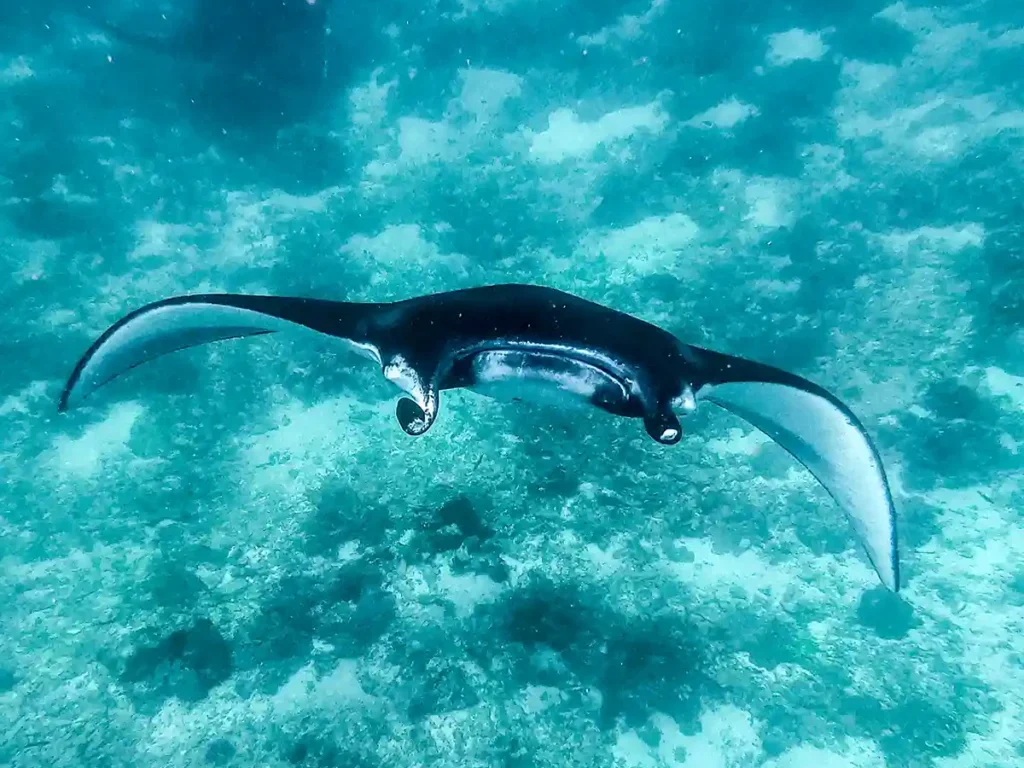
Two manta ray species are found in Indonesian waters — the reef manta (Mobula alfredi) and the larger oceanic manta (Mobula birostris) — both of which are seen in and around Komodo National Park, with reef mantas more commonly encountered at established cleaning and feeding stations. Sightings follow a well-documented seasonal current pattern: the southern part of the park, including Manta Point, generally sees more reliable manta activity during the dry season months (roughly April to November), while the northern park sites become more productive during the wetter months (roughly December to March), as monsoon-driven currents shift plankton concentrations between the two zones. Confirm with your dive or snorkel operator which sites are currently active for mantas during your travel window, since this shifts through the year rather than staying fixed at one location.
Sea Turtles
Green turtles and hawksbill turtles are both present in Komodo’s waters, most commonly encountered around seagrass beds and reef edges rather than in open water. Sightings are less predictable and site-specific than manta rays, since turtles range more widely, but they are a regular encounter on many standard snorkel and dive itineraries within the park rather than a rare event.
Coral Reefs and Reef Fish Diversity
Komodo National Park’s reefs benefit from strong tidal currents that flush nutrients through the water column, supporting dense coral growth and correspondingly high reef-fish diversity compared to many other Indonesian dive destinations. These same currents are what make some of the park’s dive sites suitable only for more experienced or certified divers — see our diving Komodo: best sites, seasons and safety tips guide for which sites suit which experience level, and our PADI diving courses in Labuan Bajo page if you want to get certified before your trip.
Sharks and Other Notable Species
Reef sharks (including whitetip and occasionally blacktip reef sharks) are present at several Komodo dive sites, generally encountered as calm, non-aggressive residents of specific reef structures rather than an open-water hazard. Depending on season and site, other notable sightings can include large schools of reef fish, and — for divers exploring deeper or more current-exposed sites — occasional pelagic species passing through. None of these require special precautions beyond standard dive safety practices and following your guide’s site-specific briefing.
Marine Conservation Rules Within the Park
Komodo National Park operates under government marine conservation regulation, and standard rules apply to all visitors regardless of operator:
- No touching marine life, including manta rays and turtles — maintaining distance protects both the animal and the visitor.
- Reef-safe sunscreen is strongly recommended, since standard sunscreen chemicals can contribute to coral stress at popular, high-traffic snorkel sites.
- No collecting coral, shells, or marine specimens from within the park.
- Fishing within park boundaries is restricted to designated zones and traditional-use arrangements, not open to general visitors.
These rules exist because the park’s marine health is precisely what sustains the diving and snorkeling experience that draws visitors here — following them is not a bureaucratic formality but a direct contributor to the reef quality future visitors (and the local fishing communities who depend on healthy waters) will experience.
Why Komodo’s Currents Matter So Much for Marine Life
Komodo National Park sits at a confluence of two major ocean systems — the Flores Sea to the north and the Sumba/Indian Ocean waters to the south — funneled through narrow straits between the park’s islands. This creates some of the strongest tidal currents in Indonesian waters, which is precisely why the park supports such dense marine life: strong currents continuously bring nutrient-rich water through the reef system, feeding both the coral and the plankton that manta rays and reef fish depend on. The same currents that make the ecosystem so productive are also why several sites require certified, experienced divers rather than beginners, and why dive and snorkel operators plan trips around tide tables rather than a fixed daily schedule.
Best Season for Marine Life Viewing by Activity
| Activity | Best season | Why |
|---|---|---|
| Manta ray snorkeling/diving (south park sites) | April–September | Dry-season currents concentrate plankton in southern feeding zones |
| Manta ray snorkeling/diving (north park sites) | October–March | Wet-season monsoon currents shift plankton concentration north |
| General reef snorkeling and calm-water swimming | April–November (dry season) | Calmer seas and generally better underwater visibility |
Frequently Asked Questions
Is it safe to snorkel with manta rays in Komodo?
Yes, when following standard guidance — maintaining distance, not touching the animals, and following your guide’s positioning instructions. Mantas are filter feeders with no capacity or tendency to harm humans; the safety guidance exists primarily to protect the animals from stress and injury caused by visitor contact.
What is the best time of year for snorkeling with manta rays in Komodo?
It depends on which part of the park you are visiting — roughly April to September favors the southern sites including Manta Point, while October to March favors northern sites, following the seasonal current pattern described above.
Do I need to be a certified diver to see manta rays?
No — many of Komodo’s manta encounters happen at accessible snorkeling depths, not only on scuba dives. Some of the more current-exposed manta sites are better suited to certified divers, so ask your operator which sites are included on a snorkel-only itinerary versus a dive itinerary.
Can beginners handle Komodo’s currents while snorkeling?
Established snorkel operators choose sites and timing appropriate for the group’s experience level, including calmer sites and slack-tide windows for less experienced snorkelers. Tell your operator in advance if anyone in your group is a less confident swimmer so the day’s site selection can account for it.
Are there jellyfish or other marine hazards to be aware of?
Standard tropical marine caution applies — avoid touching unfamiliar marine life, wear a rash guard or wetsuit if sensitive to sun or minor stings, and follow your guide’s briefing on any site-specific conditions for the day.
Why do currents matter so much for where manta rays are found?
Manta rays follow plankton concentrations, which in turn follow current patterns driven by the monsoon cycle — this is why sightings shift between the park’s southern and northern sites across the year rather than staying constant at one location, as explained above.
Plan a Marine-Life-Focused Komodo Trip
Reading the marine-life survey here reserves nothing, which is precisely what Komodo Luxury’s Komodo boat tours is for.
Planning stops here. The Komodo Luxury side takes it from there — Labuan Bajo tour options, one-day Komodo trip packages or shared open-trip departures.
Planning Your Marine Adventure: Seasons, Routes, and Local Culture
Most people arrive from Bali, since Denpasar runs regular flights to Labuan Bajo, the gateway for both Komodo National Park and the Flores coastline itself. From the harbour it is straightforward to arrange a boat out to Komodo for diving, snorkelling, or the dragons. The trip that works best combines the two halves — highland villages and volcanoes on land, then the water — rather than committing entirely to one.
Snorkelling season follows the dry season, April to November, when lower rainfall and calmer seas mean better visibility and safer boat days. December to March brings stronger winds and choppier water, and the crossings feel it. High season lines up with the dry months, and July and August are the busiest, so book ahead if you have specific sites in mind.
What you will actually see: turtles, reef sharks, barracuda, cuttlefish, and a dizzying range of reef fish from butterflyfish and angelfish up to the occasional bumphead parrotfish. The reefs off Riung, in the 17 Islands Marine Park, hold healthy hard and soft coral. For snorkelling specifically, Batu Bolong, Siaba Besar and Pengah have the vivid colour with currents that stay manageable.
After a day in the water, the food back in Labuan Bajo or aboard runs to grilled fish, sambal and rice, with island-grown coffee and seaweed snacks as the local extras. Culturally, Flores is the less commercialised of the two islands: ikat weaving still on the loom, animist practice layered under Catholic festivals. The souvenir worth carrying home is handwoven ikat, bought in the Ende or Maumere markets. None of it is difficult for a first visit — a guided tour handles everything, and doing it independently only asks that you accept bumpy roads and a slower rhythm. The marine life is the reward for making the journey at all.
More Questions Answered
Is it safe to travel around Flores Island alone?
Solo travel around Flores Island is generally safe, provided you take routine precautions. Road journeys can be lengthy and infrastructure varies; local buses (bemos), shared cars, or hiring a driver are the main options. Outside Labuan Bajo, English is less common, so basic Bahasa Indonesia helps.
Komodo Island or mainland Flores — which is better?
Komodo Island is best for wildlife—famous for dragons, mantas, and world-class snorkelling—while Flores Island offers diverse landscapes, traditional culture, and rice field treks. For marine life, Komodo excels; for culture and variety, Flores offers more off-track experiences. Most travellers combine both.
How do I get from Flores to Komodo Island?
You reach Komodo Island from Flores via Labuan Bajo harbour, with daily boats—both public ferries and private tours—departing for Komodo and neighbouring islands. The crossing takes 1.5–2 hours each way by fast boat. Most marine excursions start from Labuan Bajo.
What marine life can you see in Komodo?
Komodo marine life includes manta rays, turtles, reef sharks, bumphead parrotfish, sweetlips, nudibranchs, and vast schools of reef fish. The region sits in the Coral Triangle, making it one of the world’s richest for underwater biodiversity, especially during the dry season months.
How do I get around Flores Island?
To get around Flores Island, most travellers rely on private car hire with a local driver, which allows flexibility for remote sites and photo stops. Intercity buses, shared vans, and limited flights connect towns, but self-drive is rare due to road conditions.
Is it safe to sail around Komodo in January?
Sailing around Komodo in January is not recommended for most travellers, as it falls within the monsoon season. Seas can be rough, with frequent storms and low underwater visibility. Most liveaboard and snorkelling trips pause or reduce operations until calmer weather returns in April.
If manta rays and reef diving are your main priority, tell your operator so your itinerary can be built around the correct seasonal sites rather than a generic route. See our snorkeling in Komodo: Manta Point, Pink Beach and beyond guide, or message Komodo Luxury on WhatsApp at +62 811-3810-8110 or email sales@komodoluxury.com to plan a trip timed around the marine life you most want to see.
Keep reading
More from the journal
-
Travel Journal
Labuan Bajo After Dark: Food and Nightlife
Labuan Bajo's evening scene centers on Kampung Ujung, the waterfront dining strip near the harbour where local seafood restaurants and…
12 min Read -
Travel Journal
Digital Payments and QRIS in Flores
QRIS (Indonesia's unified QR payment standard) now works at a growing number of cafes, shops and tour operators in Labuan…
12 min Read -
Travel Journal
Cultural Preservation Efforts on Flores Island
Efforts in cultural preservation on Flores Island focus on safeguarding traditional practices and promoting heritage protection to ensure the island's…
8 min Read