
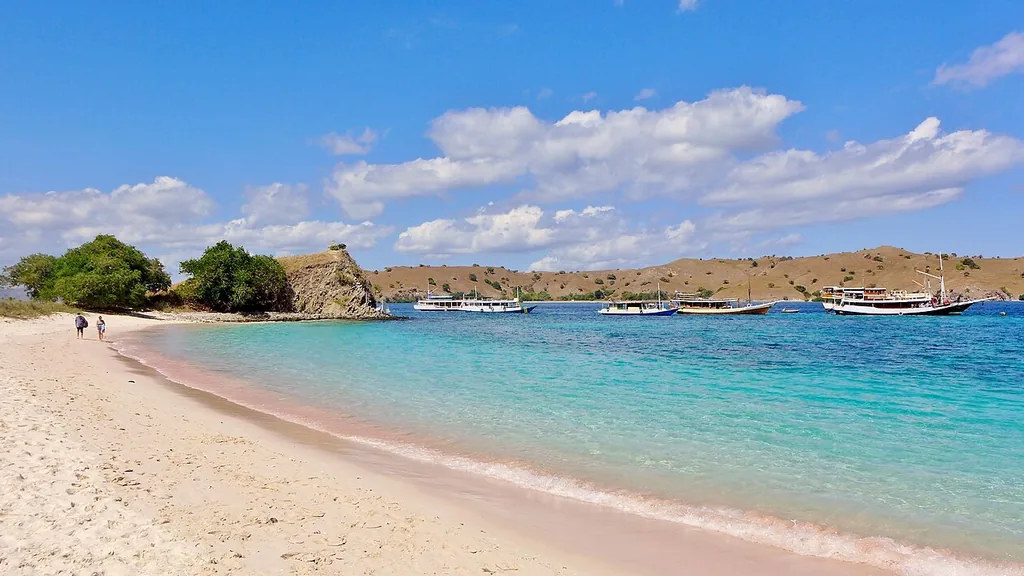
Pink Beach on Komodo Island gets its color from red-and-pink Homotrema rubrum organisms found in the local coral, which mix with white sand grains to produce a genuinely pink-tinted shoreline — most visible in dry sand and in good light. It’s reached only by boat as part of a Komodo National Park trip, usually paired with a Padar viewpoint hike and a dragon-viewing walk on the same day. Here’s how to actually see it at its best, and how to visit responsibly.
Last updated: August 26, 2026.
Why Is Pink Beach Actually Pink?
The color comes from Homotrema rubrum, a microscopic single-celled organism with a reddish-pink shell that lives on the coral reefs surrounding the beach. As waves break down coral fragments over time, these organisms’ remains mix into the sand, tinting it pink to varying degrees depending on how much coral debris and organism material is present in a given stretch. The effect is strongest in dry sand under direct sunlight and much less obvious when the sand is wet or the sky is overcast — which is worth knowing before you go, since some visitors expect a uniformly bubblegum-pink beach and are surprised by a more subtle, patchy rose tint that shifts with the light and tide.
Where Exactly Is Pink Beach, and How Do You Get There?
Pink Beach sits on Komodo Island itself, on the eastern side near Loh Liang, within Komodo National Park’s boundaries. There is no land access or public ferry — every visitor arrives by boat, either as one stop on a standard one-day Komodo boat trip, as part of a multi-day liveaboard itinerary, or occasionally as a private speedboat charter focused specifically on beach time and snorkelling. Boats depart from Labuan Bajo harbour and the ride out typically takes a few hours depending on which other stops (Padar, Komodo or Rinca Island) are on the same day’s route and in what order. See our Komodo boat trip guide for how a typical one-day itinerary sequences Pink Beach with the park’s other headline stops.
Best Time of Day and Season to Visit
Midday sun brings out the pink tint most clearly, since strong direct light shows the color contrast in dry sand better than the softer light of early morning or late afternoon — worth factoring in if your operator gives you any choice in stop order for the day. Seasonally, April to November (the dry season) offers calmer water for the boat ride and better visibility for the snorkelling that most visitors combine with beach time, while December to March brings rougher seas that can occasionally affect timing or force a reroute. Photographers specifically chasing the pink effect should ask their operator whether Pink Beach is scheduled for a midday stop rather than an early-morning or late stop, since the difference in how pink the sand looks can be significant.
Snorkelling at Pink Beach
The reef just offshore from Pink Beach is a genuine part of its appeal beyond the sand itself — coral cover and reef fish are visible from shore in clear conditions, making it an easy, low-effort snorkelling stop that doesn’t require swimming far from the beach. It’s not typically considered the park’s premier snorkelling or diving site (Manta Point and other dedicated sites get that reputation), but as a combined beach-and-snorkel stop on a one-day itinerary, it consistently delivers both. Reef-safe sunscreen is worth prioritizing here specifically because you’re likely to be in the water directly over living coral — standard sunscreen chemicals are increasingly linked to coral stress, and park operators are moving toward requiring or recommending reef-safe products. For broader manta and reef planning, see our Komodo snorkelling guide.
Visiting Responsibly: Please Don’t Take the Sand
It should go without saying, but every year some visitors try to bottle a small sample of pink sand as a souvenir — please don’t. Removing sand, shells, or coral fragments from a national park is both illegal and directly damaging to the very ecosystem that makes the beach pink in the first place, since that sand is partly made of the same reef organisms supporting the coral you may be snorkelling over an hour later. Photographs are the appropriate souvenir; a small handful of sand taken by thousands of visitors a year adds up to a real, measurable loss for a beach that isn’t large to begin with.
What to Bring for a Pink Beach Stop
- Reef-safe sunscreen — mineral-based, applied well before you’re in the water
- A rash guard or light long-sleeve top for sun protection during snorkelling, reducing how much sunscreen you need directly on skin
- A dry bag for your phone or camera, since you’ll likely want photos both on the beach and getting in and out of the water
- Reef shoes or sandals that can get wet, useful for the shoreline entry where coral fragments can be sharp underfoot
- Drinking water, since there are no facilities or vendors on the beach itself
Photography Tips for Pink Beach
Because the pink tint is subtle rather than saturated, a few small habits make a real difference in how your photos turn out. Wet a small patch of sand and compare it against dry sand nearby — the contrast makes the color noticeably clearer in a photo than trying to capture the whole beach in one wide shot. Shoot low, close to the sand, rather than from standing height, since the pink tone reads more strongly at a shallow angle in direct light. If your itinerary allows any flexibility in stop order, ask whether Pink Beach can be scheduled for the middle of the day rather than early morning or late afternoon, when the color is measurably less visible. A polarizing filter, if you shoot with a camera that supports one, cuts glare off the wet sand and water and generally improves both the sand tone and the underwater visibility in any snorkelling shots.
Pink Beach on a Private Charter vs. a Shared Trip
On a shared open-trip speedboat, your time at Pink Beach is fixed by the day’s group schedule — typically 30–60 minutes for swimming, photos, and a short snorkel. On a private charter, you can extend that stop, time it deliberately for the strongest midday light, or return for a second visit later in a multi-day itinerary if the anchorage allows. If Pink Beach and its photography are a priority rather than just one stop among several, our Komodo Yacht Charter from Labuan Bajo guide covers how a private multi-day charter gives you that flexibility.
Other Pink-Sand Beaches Worth Knowing About
Komodo Island’s Pink Beach is the best-known pink-sand beach in the park and the one almost every itinerary visits, but it isn’t literally the only shoreline in the area with visible pink tinting — smaller, less-visited stretches of coral-influenced sand exist elsewhere within the park’s islands, though they aren’t part of standard tour routes and aren’t set up for visitor access the way Komodo’s Pink Beach is. For nearly all travellers, “Pink Beach” in a Komodo itinerary means this specific, well-documented stop, and that’s the one worth planning your day around rather than chasing a lesser-known alternative that most operators don’t route to anyway.
Frequently Asked Questions
What gives the sand its colour?
Microscopic Homotrema rubrum organisms with reddish-pink shells live in the surrounding coral reef; as coral breaks down over time, their remains mix into the sand, producing the pink tint. It’s most visible in dry sand under strong sunlight.
Can you visit Pink Beach without a tour?
No — it’s only reachable by boat within Komodo National Park, so every visit happens as part of an organized boat trip, liveaboard, or private charter departing from Labuan Bajo.
Is it OK to take sand from Pink Beach as a souvenir?
No. Removing sand, shells, or coral from the national park is prohibited and damages the reef ecosystem that produces the pink color in the first place. Take photos instead.
What’s the best time of day to see the pink color clearly?
Midday, in strong direct sunlight and dry sand — the color is much less visible in overcast conditions or when the sand is wet.
Is Pink Beach good for snorkelling?
Yes, as an easy, low-effort shore snorkel with visible coral and reef fish, though it isn’t considered the park’s premier dedicated dive or snorkel site — that reputation belongs to sites like Manta Point.
How long do most tours spend at Pink Beach?
On a shared one-day speedboat trip, typically 30–60 minutes, shared with the day’s other stops. A private charter can extend this considerably if Pink Beach is a priority for your group.
Plan Your Pink Beach Visit
Reading the Pink Beach access section above reserves nothing, which is precisely what Komodo Luxury’s Komodo boat tours is for.
Pink Beach is a stop rather than a destination, so what matters is which itinerary reaches it and at what hour. Day and overnight formats out of Labuan Bajo are at Labuan Bajo tour options. A mid-range hull with private bathrooms buys the late-afternoon slot, once the day boats have gone: deluxe boat charter. Longer cruises that treat the beach as one anchorage among many are at luxury cruises across Indonesia.
Safety and Practicalities: Visiting During Komodo Dragon Mating Season and Getting There from Labuan Bajo
Many travellers wonder about the risks of visiting Komodo during the dragon mating season. Komodo dragon mating season typically runs from May through August. During this time, dragons may be more active and territorial, especially around nesting sites. However, Pink Beach is not a primary dragon habitat and is separated from the main dragon trekking zones. Tours continue to operate safely, but park authorities often increase ranger presence and may adjust walking routes on main Komodo Island. It is still safe to visit, provided you stick to official paths and heed ranger instructions.
For those curious how to reach Pink Beach from Labuan Bajo, the journey is only possible by boat—there are no roads or public ferries to the island. Most visitors join a group day tour or hire a private charter from Labuan Bajo Harbour. The trip generally takes 2 to 3 hours depending on weather, boat type, and additional stops. Some operators offer speedboats that cut travel time down to about 90 minutes each way, but these come at a premium. It is wise to book at least a day in advance during peak season, as daily departures fill quickly.
Snorkelling at Pink Beach is a major highlight, with the shallow reefs just off the sand offering accessible coral gardens and abundant marine life. Waters are clearest and calmest from April to November, when strong currents are less likely to disrupt visibility. Basic snorkelling equipment is usually included on tours, but you are advised to check gear quality or consider bringing your own mask if you are particular. Entry into the water is directly from the sand, with no jetty or platform—so fins are helpful for navigating any surge near the beach.
More Questions Answered
Do I need a guide for snorkelling in Komodo?
A guide is not mandatory for basic snorkelling at Pink Beach, but all visitors must enter Komodo National Park with a licensed ranger or as part of a registered tour. Guides are recommended for safety—they monitor currents, point out hazards, and help spot marine life. Group trips always include a ranger, while private charters can arrange snorkelling guides if requested.
How do I get to Pink Beach from Labuan Bajo?
You must take a boat from Labuan Bajo Harbour to reach Pink Beach. There are no bridges or public ferries. Most tours combine Pink Beach with other Komodo stops and depart daily between 6 and 8am. The journey takes 2–3 hours by wooden boat, or as little as 90 minutes by speedboat depending on sea conditions.
Is Komodo good for snorkelling?
Yes, Komodo is excellent for snorkelling, especially around Pink Beach and nearby reefs. The park is home to over 1,000 fish species and vibrant coral, with visibility best between April and November. Some sites have strong currents, so less experienced snorkellers may prefer the shallower beach areas. Most boat trips include multiple snorkelling stops.
Can I visit Komodo Island without a tour?
No, independent travel is not allowed—Komodo Island can only be visited with an official guide or as part of a registered tour. This is a strict park rule for both visitor safety and wildlife protection. You must arrange at least a day tour from Labuan Bajo; there are no public ferries or walk-in ranger services.
Pink Beach is included on nearly every Komodo boat itinerary — the difference is how much time and flexibility you get there. See our Komodo boat trip guide or send your dates on WhatsApp to wa.me/6281138108110 to plan a route that gives Pink Beach the time it deserves.
Keep reading
More from the journal
-

Culture & Villages
Volunteering and Giving Back in Flores
Real, verifiable conservation work is underway around Labuan Bajo — Coral Guardian and local NGO WES have restored reefs near…
9 min Read -
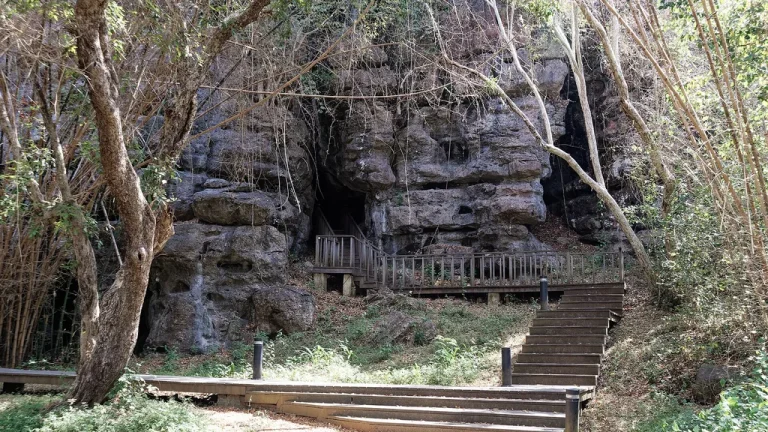
Overland Route
Batu Cermin Cave in Labuan Bajo
Batu Cermin ("Mirror Rock") is a limestone cave about 3–4 km from Labuan Bajo, formed from an ancient coral reef…
10 min Read -
Overland Route
Maumere Travel Guide: East Flores Gateway
Maumere, capital of Sikka Regency in east Flores, is served by Frans Xavier Seda Airport (MOF) with flights to Kupang,…
10 min Read