
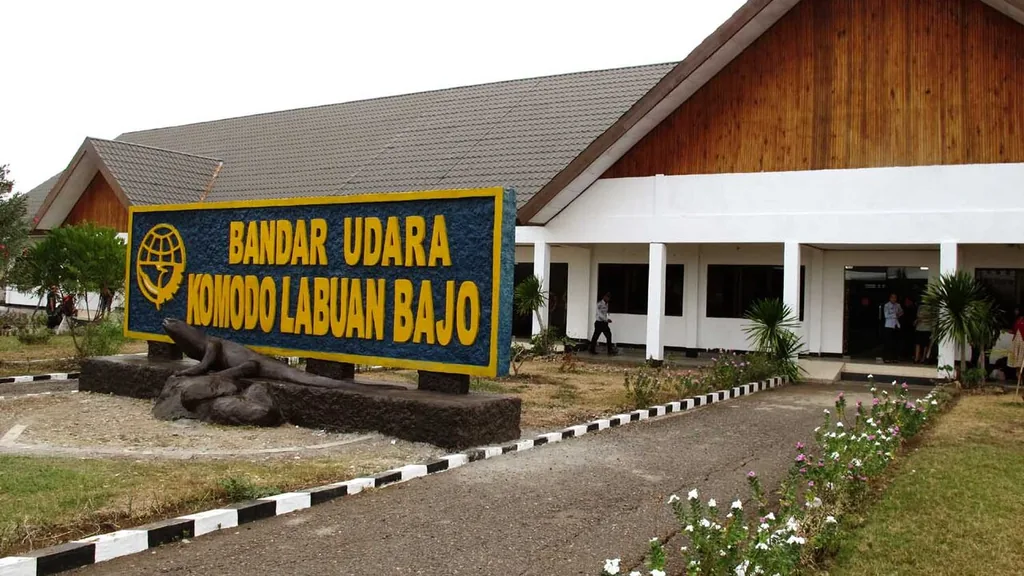
Komodo Airport (IATA: LBJ, officially Komodo International Airport) sits about 2–4 km from Labuan Bajo harbour, a 10–15 minute drive. It has one small terminal, basic ATMs and cafés, and handles domestic flights from Bali, Jakarta and Surabaya plus limited international routes to Kuala Lumpur and Singapore.
Komodo Airport (LBJ) Arrival Guide
Landing at Komodo Airport is most travelers’ first physical contact with Flores, and it sets expectations for the rest of the trip: small, functional, and built around getting you onto a boat rather than keeping you in the terminal. Here is what to expect on arrival, how to get into town, and what the airport can and cannot do for you.
What Is Komodo Airport (LBJ)?
The airport serving Labuan Bajo is officially named Komodo International Airport, commonly shortened to Komodo Airport, with IATA code LBJ and ICAO code WATO. It sits on the edge of town on the west coast of Flores, and despite the “International” in its name it functions mostly as a regional domestic airport, with a small number of international flights layered on top.
Which Airlines Fly to Komodo Airport?
Domestic connections run from several Indonesian hubs:
- Denpasar/Bali (DPS): several non-stop flights a day in peak season on Indonesian carriers — the line-up changes from year to year, so check the airline’s own schedule. Flight time is about 1 hour 15 minutes.
- Jakarta (CGK): Garuda Indonesia, Batik Air, Citilink, Indonesia AirAsia, and Super Air Jet, with multiple daily flights.
- Surabaya (SUB): Super Air Jet, roughly once daily.
- Kupang (KOE): Wings Air, roughly once daily.
- Other Flores towns: Wings Air and Susi Air connect LBJ to Ende, Maumere, Bajawa, and other regional airstrips — see our Maumere travel guide for the eastern-Flores side of this network.
International service is limited to two routes: Kuala Lumpur via AirAsia several times a week, and Singapore via Scoot (which took over the route from Jetstar Asia in mid-2025). Most international visitors still arrive via a connection through Bali or Jakarta rather than flying directly into LBJ.
What’s Inside the Terminal?
Komodo Airport is a compact single-terminal building. Facilities are basic but functional: a handful of check-in counters, a small security screening area, a few cafés and souvenir kiosks, and immigration and customs desks sufficient for the international flights it does handle. Wi-Fi coverage is inconsistent, so most travelers rely on a local SIM card bought at arrival or a data package activated before landing. Toilets are simple but generally clean.
ATMs, Cash, and Car Rental at the Airport
A small number of ATMs operate in or near the arrivals hall, but they can run dry or go offline, particularly on weekends and during peak season — do not plan to arrive with zero cash on the assumption a machine will work. There is no large international car rental counter at LBJ; ground transport runs almost entirely through local taxi drivers, hotel-arranged pickups, and informal driver services rather than a formal rental hall. If your Komodo boat trip or hotel includes airport transfer, confirm the pickup point in advance — arrivals can get crowded and confusing for first-time visitors trying to spot a driver holding a sign.
Immigration and Baggage for International Arrivals
For the Kuala Lumpur and Singapore flights, immigration and customs processing happens on-site, though queues can move slowly given the airport’s small scale. Baggage claim is a single small carousel — expect bags to take a while to appear on busy flights, especially right after a domestic arrival bank lands at the same time.
How to Get from the Airport to Labuan Bajo Town
| Option | Approx. cost | Time to harbour |
|---|---|---|
| Hotel or tour operator pickup | Often included in booking | 10–15 minutes |
| Airport taxi | Modest fixed fare, confirm before boarding | 10–15 minutes |
| Ride-hailing app | Coverage is inconsistent; not guaranteed to be available | 10–15 minutes |
The airport sits close enough to the harbour and town center — most guides put it at 2 to 4 km — that traffic, not distance, is the main variable in travel time. Ten to fifteen minutes is typical; treat anything longer as a sign of unusually heavy traffic rather than the norm.
Timing Your Arrival Around a Boat Departure
If your Komodo boat trip departs the same day you land, build in a buffer. Domestic flight schedules in Indonesia shift more than international ones, and a delayed morning flight can eat into your first afternoon on the water. Arriving by 10 or 11 a.m. gives enough margin to clear the airport, transfer to the harbour, and board in time for an afternoon start — see our Komodo tour from Bali guide for how this timing works end to end from a Denpasar departure.
SIM Cards and Connectivity on Arrival
Local SIM card counters and kiosks operate near the arrivals area, selling Indonesian carrier SIMs (Telkomsel, XL, and Indosat are the most common) with data packages aimed squarely at tourists. Coverage on Flores is generally decent in Labuan Bajo town and along the main roads but drops off quickly once you head into the highlands toward Bajawa or Moni, so buy a package and get it activated before you leave the airport rather than assuming you can sort it out later in town. If your Komodo boat trip is entirely offshore for two or three days, expect little to no signal once you clear the harbour — most boats do not carry satellite internet, though some premium vessels now offer Starlink connectivity as a selling point.
What to Do If Your Flight Is Delayed
Domestic flight delays into LBJ are common enough to plan around rather than hope against. If you have a same-day boat departure booked, message your operator as soon as you know about a delay — most Labuan Bajo operators are used to this and can shift the departure time or, in the worst case, arrange a next-morning start instead of losing your deposit. If you are traveling independently without a pre-booked operator, treat any arrival after early afternoon as a signal to plan on boarding the following morning rather than rushing into a late-departure booking with an unfamiliar boat.
Recent Upgrades and What’s Changed
Komodo Airport has expanded meaningfully over the past decade from a small airstrip into its current terminal, and continues to see incremental upgrades tied to Labuan Bajo’s status as a national priority tourism destination under Indonesia’s Ministry of Transportation infrastructure program. The most concrete recent change is on the international side: the Singapore route changed operators from Jetstar Asia to Scoot on 31 July 2025 after Jetstar Asia ceased operations, while the Kuala Lumpur route via AirAsia has continued. Expect continued gradual upgrades to terminal capacity rather than a single dramatic rebuild.
Loose Ends Worth Answering
How far is Komodo Airport from Labuan Bajo town center?
Most current guides put the distance at approximately 2 to 4 km, with a typical drive time of 10 to 15 minutes depending on traffic.
Does Komodo Airport have international flights?
Yes, on a limited basis — AirAsia flies to Kuala Lumpur several times a week, and Scoot flies to Singapore (having taken over the route from Jetstar Asia in mid-2025). Most other traffic is domestic.
Can I get cash at Komodo Airport?
A small number of ATMs operate near arrivals, but they can run out of cash or go offline, so it is safer to carry some cash on arrival rather than rely entirely on an airport machine.
Is there car rental at Komodo Airport?
Not in the form of a large international rental counter — ground transport is mostly local taxis, hotel or tour operator pickups, and informal driver arrangements rather than a formal car-rental hall.
How early should I arrive before an international flight from Komodo Airport?
Given the airport’s small scale and occasionally slow queues at check-in and security, arriving around two hours before an international departure is a reasonable buffer.
Will my phone work at Komodo Airport, and should I buy a SIM there?
Yes — local SIM card kiosks operate near arrivals with Telkomsel, XL, and Indosat packages aimed at tourists; buying and activating one at the airport is simpler than waiting until you reach town, especially since coverage weakens once you leave Labuan Bajo for the highlands.
Continue planning: see how the airport connects to a shared Komodo boat departure, or check the Flores and Komodo FAQ for more on getting around once you land.
The LBJ arrival sequence described here is our side of the work; the operator’s side starts at Komodo Luxury’s Labuan Bajo yacht rental desk.
This page plans the trip; the booking runs through Komodo Luxury: Labuan Bajo tour options, luxury yacht charters across Indonesia or Komodo Luxury’s own FAQ.
Transport Options Beyond the Airport: Exploring Labuan Bajo and Beyond
Once through arrivals, most visitors will need transportation from Labuan Bajo airport into town or directly to the harbour. The airport lacks a public bus system, so choices are limited to taxis, ride-hailing apps (when drivers are available), and pre-arranged hotel or tour pickups. Metered taxis queue outside the terminal and are the default for most, taking about 10–15 minutes to reach central Labuan Bajo. For those travelling in groups or with heavy luggage, some hotels run airport shuttles, but these usually require advance booking.
If you intend to explore Flores beyond Labuan Bajo, rental cars are available from counters inside the terminal. However, driving yourself is only recommended for those with previous experience in Indonesia and an International Driving Permit, as roads can be narrow and not all are well-marked. For Komodo National Park trips, transport is usually included in your boat package, with operators meeting arrivals landside. For independent travellers, arranging a private car and driver for day trips is straightforward but should be negotiated before arrival where possible.
Sorting out money on arrival is equally practical. Many visitors find the best way to get cash in Labuan Bajo is simply withdrawing from an ATM in town. While Komodo Airport offers a couple of ATMs, these may run out of cash during busy periods. The main street in Labuan Bajo has multiple working machines attached to banks—these are generally more reliable and allow larger withdrawals. Card acceptance is improving but cash remains essential for taxis, market shopping, and many midrange hotels. Keep small notes for boat trips, tips and local purchases, as larger denominations are sometimes refused.
If you arrive late or during national holidays, expect some ATMs to be out of service or empty. It is wise to carry a small emergency reserve until you confirm access to cash. As a rule, secure cash before heading to the islands or rural Flores, where machines are rare and often limited to Indonesian cards.
More Questions Answered
Are ATMs easy to find in Labuan Bajo?
Yes—Labuan Bajo’s main street has a cluster of ATMs attached to major banks, open all year. Machines can run low on cash during peak tourist season (June–September) or holidays, so it’s wise to withdraw what you need soon after arriving. Most accept international cards but occasionally reject certain networks.
How to get from Komodo Airport to town?
The quickest way from Komodo Airport to town is by taxi, taking 10–15 minutes to central Labuan Bajo. Taxis wait outside the arrivals exit; some hotels offer pickups if booked ahead. No public buses operate, and walking is not practical due to hills and traffic.
How to get from Labuan Bajo to Komodo?
To reach Komodo, join an organised boat trip from Labuan Bajo harbour. Daily excursions, both group and private, visit islands in Komodo National Park. The crossing to Komodo Island itself takes around 4–5 hours or more by slow wooden boat, or roughly 1.5–2 hours by speedboat. There is no land connection—boats are essential.
Where to get cash in Labuan Bajo?
The best place to get cash in Labuan Bajo is one of the ATMs on the main street, especially those attached to bank branches. These usually allow bigger withdrawals and tend to be restocked more regularly than standalone units elsewhere. Avoid depending on airport ATMs, which can run empty at busy times.
Sumber
Keep reading
More from the journal
-

Overland Route
Maumere Travel Guide: East Flores Gateway
Maumere, capital of Sikka Regency in east Flores, is served by Frans Xavier Seda Airport (MOF) with flights to Kupang,…
10 min Read -

Overland Route
Batu Cermin Cave in Labuan Bajo
Batu Cermin ("Mirror Rock") is a limestone cave about 3–4 km from Labuan Bajo, formed from an ancient coral reef…
10 min Read -
Overland Route
Ruteng Travel Guide: Highland Manggarai
Ruteng is the highland capital of Manggarai regency, 135 km and a 4–5 hour drive east of Labuan Bajo, sitting…
10 min Read