We state
What is checkable
Figures, rules and trade-offs.
- Government fees and quotas, cited by regulation
- Drive times as ranges, dated
- Operator inclusions as published by the operator
- Season effects stated in both directions
Standards · Silo 5
How road, transport and cultural information on this site is checked — and the specific claims we decline to make.
Distances on Flores are measured in hours, not kilometres. That is a standard, not a stylistic choice.
Hours not km
How distance is stated
30–40 km/h
The average behind that rule
2026 dated
Every figure carries a year
0 claims
Beyond what we can show
Distance
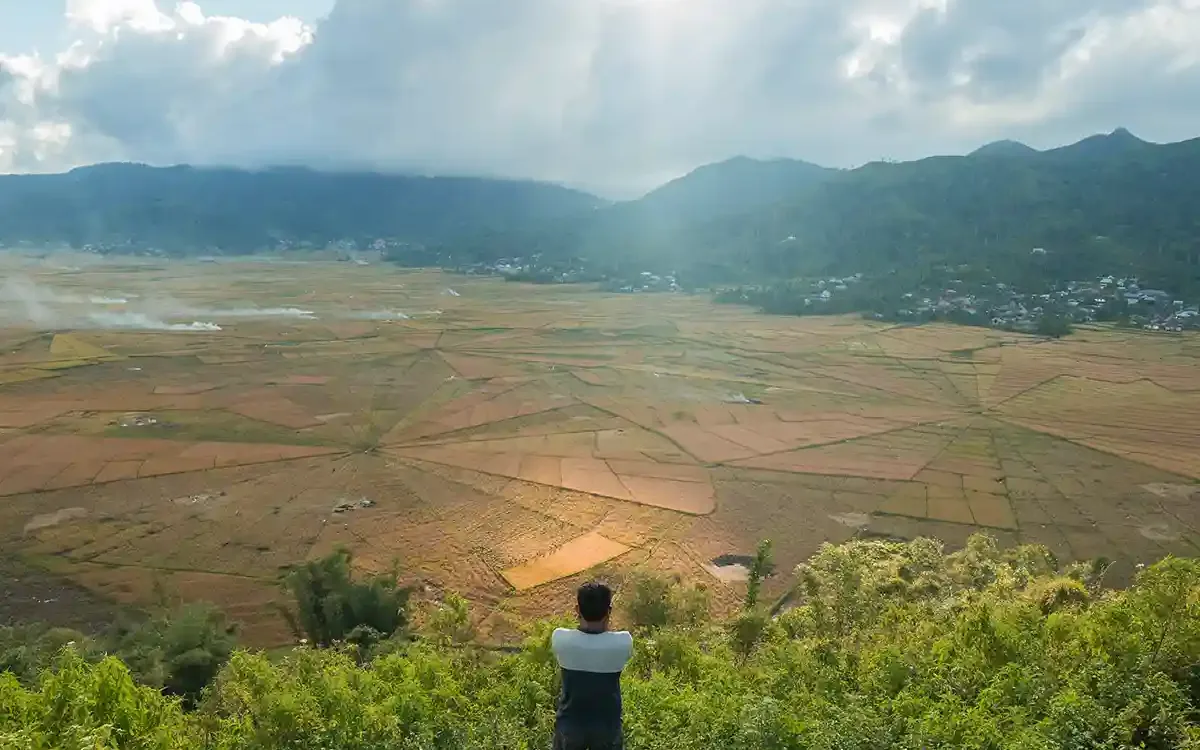
Mountain driving on Flores averages 30–40 km/h. A distance in kilometres therefore tells a reader almost nothing useful about their day, and consistently makes routes look shorter than they are.
So every route on this site states drive hours as a range alongside the distance. Where the two disagree — 71 km from Bajawa to Riung taking three and a half to six hours — the hours are the honest figure and the kilometres are context.
Ranges rather than single times, because weather, roadworks and how often you stop move them more than the road itself does.
Culture and sites
Villages here are lived in, and that changes how they should be written about.
The limits
A short list, and the reason each is on it.
What is checkable
Figures, rules and trade-offs.
What we cannot show
Anything requiring authority we lack.
If a page here needs a claim we cannot support, the page is written without it rather than with a hedge.
Corrections
Same process as everywhere else on this site.
The page URL and what looks wrong is enough.
Regulation, operator, or agency — whichever the claim rests on.
Corrected in place rather than annotated at the bottom.
So the next reader can see the page has been revised.
The wider process
The editorial desk page covers who drafts and checks the pages, why there are no individual bylines, and what the commercial relationship with the operator is.
Standards questions
Short answers to the ones that come up.
For the full set, see our FAQ — 135 questions answered.
Because mountain roads here average 30–40 km/h. A kilometre figure alone consistently makes a route look shorter than the day actually is.
Weather, roadworks and stops move them more than the road does. A single number would be wrong more often than right.
No. We publish what to check before you pay — safety equipment, written itineraries, fee transparency — rather than certifying vessels we have not inspected.
By following what the villages and their guides state, and by omitting details we are unsure of rather than guessing.
No, and neither can any operator. Manta season and Kelimutu visibility are stated as odds, not promises.
Yes. Every image shows what its caption says it shows, and AI-generated imagery is not used to depict real places.
We remove or withhold the detail. Community requests take precedence over completeness.
Message the desk with the page and the problem. The page is corrected in place and the revision date moves.
Talk to Komodo Luxury
Corrections go into the page itself. Booking questions go to Komodo Luxury.
No obligation, and no price here changes because you asked.